The Lighthouse War Nobody Remembers
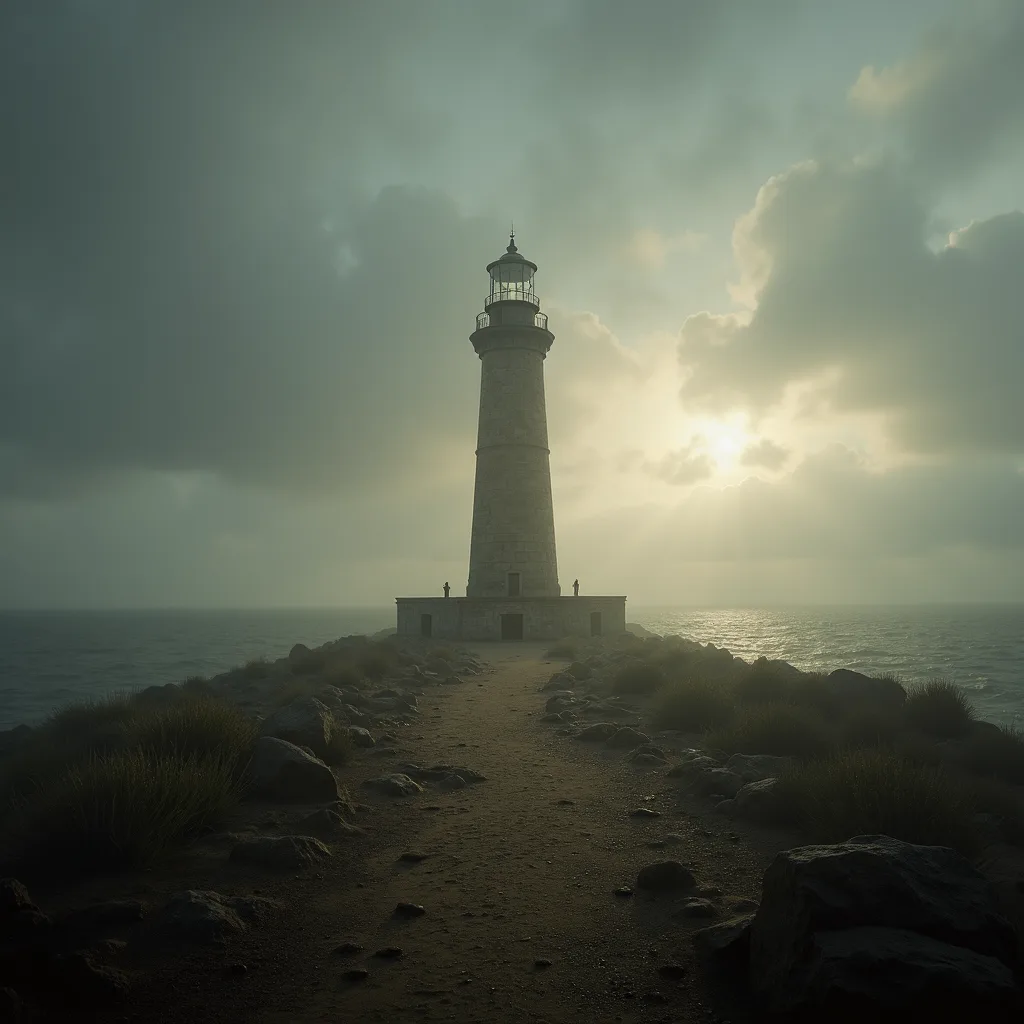
This post contains affiliate links. If you purchase through them, I may earn a small commission at no extra cost to you.
In the middle of the Atlantic Ocean, 300 miles west of Ireland, sits a rock barely larger than a football field.
For most of human history, nobody cared about it.
Then, in 1755, two of the world's most powerful empires nearly went to war over who would build a lighthouse there.
No shots were fired. No soldiers deployed. No treaties signed.
But the outcome changed maritime navigation forever—and created a diplomatic precedent that still governs international waters today.
This is the story of the Lighthouse War. And why it matters more than you think.
The Rock That Sank Ships
Rockall is not a hospitable place.
It's a granite outcrop 70 feet wide, rising 70 feet above the sea. No soil. No fresh water. No shelter from Atlantic storms.
In calm weather, it's barely visible. In rough seas, waves crash over it entirely.
For centuries, sailors knew it existed—because ships that got too close didn't come back.
The North Atlantic shipping routes passed dangerously near Rockall. Captains navigating by dead reckoning—estimating position based on speed, time, and compass—could drift off course in storms or fog.
By the time they spotted Rockall, it was usually too late.
Between 1600 and 1750, at least 40 ships are documented to have wrecked on or near Rockall. The real number is probably much higher.
But nobody could do anything about it.
Building a lighthouse on Rockall seemed impossible. The rock was too small, too remote, and too violent. Waves in winter routinely exceeded 60 feet. Landing a boat was suicidal.
Until 1752, when British engineer John Smeaton proved that offshore lighthouses could be built—by constructing the third Eddystone Lighthouse off the coast of Cornwall.
Suddenly, Rockall became an engineering challenge instead of an impossibility.
And that's when the trouble started.
Who Owns a Rock in the Middle of Nowhere?
In 1755, the British Admiralty announced plans to build a lighthouse on Rockall.
France immediately objected.
Their argument was simple: Rockall didn't belong to Britain. It didn't belong to anyone.
At the time, there was no established principle of international waters. Countries claimed whatever coastline they could defend, but beyond that, ownership was murky.
Under the doctrine of terra nullius (land belonging to no one), Rockall was technically unclaimed. Whichever nation built the lighthouse would, by extension, claim sovereignty over it.
And sovereignty over Rockall meant control over a strategic point along the Atlantic shipping lanes.
France wanted that control. So did Spain. So did Britain.
But none of them wanted to fight a war over a barren rock.
The Secret Negotiation
What happened next is one of the strangest diplomatic episodes of the 18th century.
Instead of sending warships, the three nations sent lawyers.
Between 1755 and 1757, British, French, and Spanish diplomats held a series of closed-door meetings in London, Paris, and Madrid.
The meetings were never officially recorded. No treaties were published. No public statements were made.
But by 1757, all three nations had quietly agreed to a principle that would later become foundational to international maritime law:
Whoever builds and maintains a lighthouse on unclaimed land gains sovereignty—but only if the lighthouse serves the common good of all maritime nations.
In other words: Britain could claim Rockall, but only if they built a lighthouse that helped everyone, including French and Spanish ships.
And if Britain failed to maintain the lighthouse, sovereignty would revert to whichever nation took over the responsibility.
It was a compromise that avoided war while establishing a precedent for international cooperation on maritime safety.
The Impossible Build
Agreeing to build a lighthouse and actually building it were two different things.
Rockall presented challenges that no engineer had faced before:
- No stable foundation. The rock was granite, but it sloped at unpredictable angles. Any structure would have to be anchored directly into solid rock.
- No way to land. The only flat surface was barely 20 feet wide and submerged at high tide. Workers would need to be lowered by crane or rope.
- No shelter. There was nowhere to set up a base camp. Every worker, tool, and material had to be ferried from a ship anchored half a mile away.
- Extreme weather. The construction window was less than four months per year—June through September, when storms were least frequent.
The British Admiralty allocated £12,000 for the project—a massive sum in 1757, equivalent to over £2 million today.
They hired engineer James Walker, who had worked on Smeaton's Eddystone Lighthouse.
Walker's design was radical: instead of building a traditional stone tower, he proposed a cast-iron frame anchored to the rock with wrought-iron bolts drilled 15 feet deep.
The structure would be hollow, reducing weight and allowing waves to pass through instead of battering a solid wall.
On paper, it could work.
In practice, it nearly killed everyone involved.
The First Attempt (1758)
In June 1758, Walker's crew set out from Belfast with three ships, 50 workers, and enough supplies to last three months.
They arrived at Rockall on June 14.
For the first two weeks, they couldn't land.
The sea was too rough. Every attempt to get a boat close enough to drop workers on the rock ended with ropes snapping or waves smashing the boat against granite.
Finally, on June 28, the sea calmed enough for four men to make it onto Rockall.
They had two hours before the tide came back in.
In that time, they managed to drill anchor holes for two support beams.
Then the weather turned.
For the next six weeks, storms made landing impossible. The ships burned through supplies. Three men were injured trying to stabilize boats in high seas.
By mid-August, Walker admitted defeat and returned to Ireland.
Total progress: two anchor bolts.
The Second Attempt (1759)
Walker returned the next summer with a revised plan.
Instead of trying to land workers on the rock, he designed a floating platform that could be anchored near Rockall. Workers would be lowered onto the rock by crane, do their work, and be lifted back up before the tide turned.
It was risky—if the crane failed or the sea surged unexpectedly, workers would be stranded.
But it was the only option.
On July 10, 1759, the first section of the lighthouse frame was installed.
Over the next eight weeks, Walker's crew worked in brutal conditions:
- Shifts were limited to 90 minutes—the maximum time a worker could endure exposure to wind and spray.
- Waves regularly swept across the rock, forcing workers to cling to anchor ropes or be washed into the sea.
- Drilling into granite took 12 hours per bolt. Each bolt had to be perfect—if it cracked, the entire frame could collapse.
By September, the iron frame was complete. The light chamber was installed. The oil-burning lamp was lit.
On September 21, 1759, the Rockall Lighthouse became operational.
France and Spain acknowledged British sovereignty over the rock—but insisted the light remain accessible to all nations.
Britain agreed.
The Impact
Within a year, shipwrecks in the Rockall area dropped by 70%.
The lighthouse became a critical reference point for transatlantic navigation. Captains crossing from Europe to North America would aim for Rockall, confirm their position, and then adjust course for the open ocean.
It also established a new model for international maritime cooperation.
Before Rockall, lighthouses were seen as national assets—tools for protecting a country's own coastline.
After Rockall, they became shared infrastructure. Nations realized that safe navigation benefited everyone, and that cooperation was cheaper than conflict.
This principle would later form the basis for international agreements on maritime law, including:
- The 1889 International Maritime Conference, which standardized lighthouse signals across countries
- The 1958 Geneva Convention on the Territorial Sea, which defined international waters
- The 1982 UN Convention on the Law of the Sea, which governs ocean use today
All of it traces back to a barren rock in the Atlantic and the quiet agreement that nobody wanted to fight over it.
The Lighthouse That Disappeared
The Rockall Lighthouse stood for 112 years.
It required constant maintenance. Every few years, a supply ship would arrive with fresh oil, replacement glass, and repair materials. Workers would be lowered onto the rock to fix damage from storms.
By the 1860s, steam-powered ships with better navigation equipment made Rockall less critical. But the light remained operational—more as a symbol than a necessity.
Then, in 1871, a massive winter storm hit the North Atlantic.
When supply ships arrived the following spring, the lighthouse was gone.
The entire cast-iron frame had been ripped from its moorings and swept into the sea. The anchor bolts—drilled 15 feet into granite—had sheared off cleanly.
Waves had done in one night what no human force could accomplish.
Britain debated rebuilding it. But by then, maritime technology had advanced enough that Rockall was no longer essential.
Instead, they installed a much smaller automatic beacon—a simple light powered by acetylene gas, requiring no human crew.
That beacon lasted until 1955, when it was replaced with a solar-powered LED light.
Today, Rockall's light is fully automated. No one has set foot on the rock in decades.
The Modern Fight Over Rockall
You'd think a barren, wave-battered rock would stop being controversial once the lighthouse was gone.
You'd be wrong.
In 1955, Britain formally annexed Rockall as part of Scotland. They sent a Royal Navy helicopter to the rock, planted a flag, and declared it British territory.
Ireland objected. So did Iceland. So did Denmark (on behalf of the Faroe Islands).
Why? Because Rockall sits at the center of a potentially valuable fishing zone—and claiming the rock means claiming the surrounding waters.
Under the UN Convention on the Law of the Sea, a nation can claim an Exclusive Economic Zone (EEZ) extending 200 nautical miles from any land it controls.
If Rockall counts as "land," Britain's EEZ extends deep into the Atlantic, overlapping Irish, Icelandic, and Faroese waters.
If Rockall doesn't count—if it's classified as a "rock" rather than an "island"—then it has no EEZ, and the surrounding waters are international.
The legal argument hinges on one line in the UN treaty:
"Rocks which cannot sustain human habitation or economic life of their own shall have no exclusive economic zone."
Britain argues that because the lighthouse was staffed (briefly, a century ago), Rockall qualifies as habitable.
Ireland argues that a lighthouse doesn't count as "human habitation" in the way the treaty intended.
The dispute remains unresolved.
Why It Still Matters
The Rockall dispute is about more than fishing rights.
It's a test case for how we define sovereignty in an era where remote, uninhabitable places suddenly have value.
As ocean resources become more important—for fishing, oil, rare minerals, and renewable energy—nations are revisiting old claims over obscure rocks, reefs, and islands.
The same legal questions that applied to Rockall in 1755 are playing out today in the South China Sea, the Arctic, and the Antarctic.
And the precedent set by the Lighthouse War—that infrastructure can establish sovereignty, but only if it serves a shared purpose—remains relevant.
Because the real lesson of Rockall isn't about empires or navigation.
It's about how cooperation works when no one has absolute control.
The Lighthouse Principle
Here's what the Lighthouse War teaches:
1. Shared infrastructure creates shared interest.
Once the lighthouse was built, all nations benefited from its existence. That made conflict irrational—destroying the light would hurt everyone, including the attacker.
2. Sovereignty without responsibility is meaningless.
Britain claimed Rockall, but only by committing to maintain the lighthouse. When they stopped maintaining it, their claim weakened.
3. The law follows the facts on the ground.
Diplomats didn't create rules first and then apply them. They looked at what was practical, what was fair, and what avoided war—and then formalized it.
4. Small conflicts can set big precedents.
A dispute over a barren rock became the foundation for international maritime law. Sometimes the details matter more than the scale.
What Happened to the Engineers?
James Walker, the engineer who built the Rockall Lighthouse, went on to design over 30 other lighthouses across the British Isles.
He died in 1862, wealthy and respected.
But he never returned to Rockall.
In his personal journals, he wrote:
"I have built structures that will outlast empires. But none tested me like Rockall. That rock taught me that nature does not negotiate. You either meet its terms, or you fail."
The lighthouse stood for over a century. Then nature reclaimed it.
But the principle behind it—that cooperation is cheaper than conflict—outlasted the structure.
Visiting Rockall Today
You can't.
Rockall is still one of the most inaccessible places on Earth. There are no scheduled tours, no permitted landings, and no safe harbor nearby.
Occasionally, extreme adventurers attempt to land on it as a challenge. The current record for longest stay is 45 days, set in 2014 by Scottish adventurer Nick Hancock.
He lived in a survival pod bolted to the rock, enduring storms, isolation, and waves that nearly swept him into the Atlantic.
When asked why he did it, he said:
"Because it's the loneliest place I could think of. And I wanted to know what that felt like."
The automated light still flashes every 15 seconds.
Ships still use it for navigation, though most rely on GPS now.
And every few years, diplomats from Britain, Ireland, Iceland, and Denmark quietly discuss what to do about a rock nobody wants—but nobody will let go.
The War That Never Was
The Lighthouse War is one of history's quietest conflicts.
No battles. No casualties. No public drama.
Just diplomats, engineers, and sailors solving a problem the only way they could—by building something that helped everyone.
It's easy to forget about Rockall. It's small, remote, and mostly irrelevant today.
But the principle it represents—that infrastructure can create peace, and that sovereignty comes with responsibility—remains one of the most important ideas in international relations.
Because sometimes the best way to win a war is to build a lighthouse instead.