The Inca Road Network That Predicted Modern Supply Chains
This post contains affiliate links. If you purchase through them, I may earn a small commission at no extra cost to you.
The short answer: The Inca road network, spanning 5,600 miles across mountains and deserts, was the most advanced supply chain of its time—powered not by machines, but by a flawless human relay, and it reveals that speed depends on systems, not technology.
How did the Inca move information and goods so fast without writing or wheels?
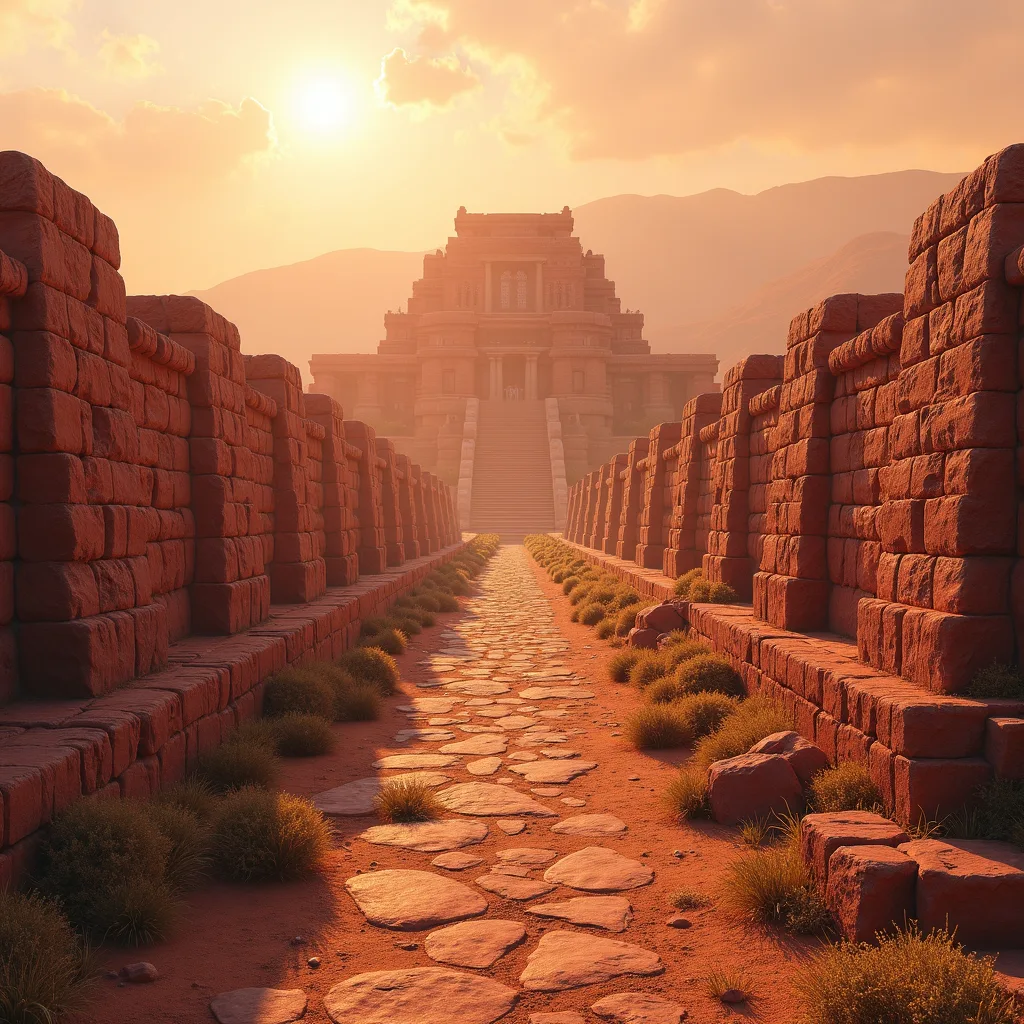
The Inca achieved military-grade speed by perfecting the human relay—using trained runners (Chasquis) who sprinted 8–12 miles each, passing messages in under 5 minutes at mountain altitudes. This was the Inca nervous system—the Qhapaq Ñan, a network of stone-paved roads built between the 13th and 15th centuries. It spanned the entire Andes, from modern Ecuador to Chile, over 5,600 miles long—longer than the Roman road system at its peak.
Imagine a message leaving Cusco to reach Quito—600 miles away—and arriving in just five days. That’s 120 miles per day, faster than the Pony Express in 19th-century America. And they did this through snow, ice, and jungles—without iron, beasts of burden, or maps. All coordination was done orally through quipus (knotted strings) and route memorization. This wasn’t just movement; it was orchestration.
What made the Chasqui system so reliable?
The Chasqui relay succeeded because of precise infrastructure, training, and incentives—every 1.5 to 3 miles, a tambos (waystation) stood stocked with food, water, and runners ready to sprint. Each Chasqui was selected in childhood for speed and endurance. They trained on high-altitude terrains and mastered sign memorization. When a torch or shout signaled an incoming runner, the next Chasqui was already poised, waiting.
The system operated like a pit crew in Formula 1—zero lag. No messages were written. Information passed verbally with absolute fidelity. A commander could order a troop mobilization in Bolivia and have confirmation back in five days—faster than any European monarch could mobilize forces across half their kingdom.
How did the road system support logistics and governance?
The Qhapaq Ñan wasn’t just for messages—it was a full-scale supply chain, moving food, troops, and goods to stabilize an empire of 12 million people across rugged terrain. Tambos stored tens of thousands of quinoa bundles, potatoes, dried meat, and textiles—all redistributable during famines or wars.
When the Spanish arrived in 1532, they were stunned by the system's capacity. Francisco Pizarro reported "storehouses that feed armies not seen by the men who built them"—a logistical model where surplus was moved to need, not profit. Inca governors (Sapa Inca) controlled the economy from Cusco, allocating resources via this network. It was the world’s first centrally managed supply chain, and it thrived on coordination, not currency. As described in Guns, Germs, and Steel, the Inca didn’t conquer with steel—they maintained through systems.
Why can’t modern tech replicate this efficiency in crisis zones?
Modern logistics fail in complexity and bureaucracy—because software doesn’t replace trust, and algorithms don’t adapt like trained humans in a high-stakes relay. Try this: send an urgent update from L.A. to NYC using Slack, Zoom, and text—and see how many hops it takes. Then compare it to the Chasqui: one verbal handoff, immediate transmission, perfect recall.
Modern companies like Amazon and FedEx rely on vehicles and AI routing. But in disaster zones—Puerto Rico post-Maria, Haiti after the quake—human chains restored communication fastest. The Inca understood a truth Silicon Valley often misses: speed isn't in the tech—it's in the simplicity of trained people and dedicated paths.
Key Definitions
- Qhapaq Ñan
- The royal Inca road network, a 5,600-mile system of footpaths connecting cities, administrative centers, and military outposts from present-day Colombia to Chile.
- Chasqui
- A trained Inca runner who relayed spoken messages swiftly between tambos, covering up to 12 miles per leg at high speed.
- Tambo
- Waystation along the Inca road system, stocked with supplies and runners, used to sustain the relay and support travelers.
- Quipu
- A system of knotted strings used to record data such as censuses, tax obligations, and inventories—acting as a non-written database for the empire.
What can modern businesses learn from this ancient system?
Start with purpose-built, human-centered design—not algorithm-heavy overengineering. Startups spend millions on AI-powered supply chain software—but often fail at the last mile: trust, training, and physical execution.
The Inca system was antifragile. One runner falls? The next takes over. No single point of failure. Compare that to a global logistics company where one port strike halts supply lines worldwide. Resilience isn’t in redundancy of tech—it’s in the autonomy of roles and strength of culture.
Modern parallels exist: Zappos’ culture of empowered employees, or W. Edwards Deming’s quality circles. But we’ve over-automated the human element. The Inca remind us: build for failure, train your people, then let them own the process.
As explored in The Ancient City That Outlasted Empires, longevity lies in resilience, not complexity.
The Bottom Line
The Inca road network proves that innovation isn’t about tech—it’s about systems. They moved information faster than Rome with no metal, no wheels, no writing. Speed comes from trained humans, simple rules, and flawless logistics—not software alone.
Frequently Asked Questions
- Did the Spanish destroy the Inca road system?
- No—the Spanish repurposed it for colonial control. Much of the Qhapaq Ñan is still walkable today. In fact, modern Peru and Bolivia use parts of the same routes for highways.
- How do we know so much about Chasqui operations?
- Early Spanish chroniclers like Garcilaso de la Vega—son of an Inca princess—documented the system in detail. Archaeologists also confirmed tambos and route markers through excavations.
- Can this work for modern teams?
- Absolutely. Small, fast-moving feedback loops—like daily standups with clear handoffs—mirror the Chasqui. It works in hospitals, fire departments, and agile startups. As Sapiens argues, human cooperation at scale is our real superpower.