The Bread That Tells a Nation's Story
This post contains affiliate links. If you purchase through them, I may earn a small commission at no extra cost to you.
In 1793, the women of Paris marched on Versailles. They carried pikes, muskets, and a single demand: bread. Marie Antoinette almost certainly never said "let them eat cake" — the quote predates her by decades — but the sentiment it captures was real. When bread becomes unaffordable, governments fall. It happened in France. It happened in Egypt in 2011. It happened in Sudan in 2018.
Bread isn't just food. It's the most politically charged substance in human history. And every culture's bread tells a story about what that culture values, what it grows, what it endures, and who it is.
Grain Determines Destiny
The bread a culture makes is dictated first by the grain its climate supports. This seems obvious until you trace the consequences.
Wheat thrives in temperate climates with moderate rainfall — the Fertile Crescent, the Mediterranean, Northern Europe, the North American plains. Wheat is high in gluten, a protein that traps air bubbles during fermentation. This produces leavened bread — the risen loaves we associate with European baking. The entire tradition of crusty, airy, oven-baked bread exists because of a biochemical property of a specific grass.
Rice dominates in tropical and subtropical Asia, where monsoon patterns make wheat cultivation impractical. Rice flour has no gluten, which means no risen loaves. Instead, Asian bread traditions developed around steaming (Chinese mantou, baozi), frying (Indian puri), and flat griddle cooking (Korean hotteok). The technology of the oven — central to European bread — was less relevant in rice cultures because the grain didn't reward it.
Corn — indigenous to the Americas — produces masa when treated with lime in a process called nixtamalization, developed by Mesoamerican civilizations around 1500 BCE. This yielded tortillas: flat, unleavened, infinitely adaptable. The tortilla isn't simple food — it's an engineering solution to the problem of making corn nutritionally complete. Without nixtamalization, corn lacks bioavailable niacin, and populations that eat untreated corn develop pellagra. The ancient process that created the tortilla also prevented a nutritional catastrophe.
Teff — a tiny grain native to the Ethiopian Highlands — produces injera: a spongy, fermented flatbread with a distinctive sour tang. Teff is the only grain that thrives above 2,500 meters in Ethiopian altitudes. No teff, no injera. No injera, no Ethiopian cuisine as we know it. As I explored in cooking as cultural connection, food traditions aren't arbitrary preferences — they're survival strategies encoded as culture.
The French Baguette: Revolution in a Loaf
The baguette — that long, thin, crusty loaf that defines France — is younger than you think. Its modern form dates to the early 20th century, possibly shaped by a 1920 French law prohibiting bakers from working before 4 AM. The long, thin shape baked faster than a round boule, letting bakers comply with labor regulations and still have fresh bread ready for morning customers.
But the cultural significance of bread in France goes back centuries before the baguette. France's Bread Law of 1791 — passed during the Revolution — guaranteed citizens the right to affordable bread. Price controls on bread (le maximum) were enforced with guillotine-backed seriousness. Bakers who adulterated flour or hoarded grain were executed.
Today, France consumes roughly 10 billion baguettes per year — about 150 per person annually. The baguette was inscribed on UNESCO's Intangible Cultural Heritage list in 2022. Not because of the recipe — which is just flour, water, salt, and yeast — but because of the social infrastructure around it: the neighborhood boulangerie, the twice-daily purchase, the cultural ritual of breaking bread that structures French daily life.
The lesson: a bread's importance has almost nothing to do with its complexity. Four ingredients. A nation's identity.
Naan, Roti, and the Indian Bread Spectrum
India doesn't have a bread. It has dozens. And the differences between them map precisely onto geography, class, and religion.
Naan — the pillowy, tandoor-baked bread most Westerners know — is historically a Mughal court bread. The tandoor oven required infrastructure: permanent installation, high temperatures (480°C/900°F), and fuel. Naan was urban bread, restaurant bread, wealthy bread. The average Indian household didn't have a tandoor any more than the average American household has a pizza oven.
Roti (chapati) is the democratic bread — made on a flat tawa griddle that every household owns, from whole wheat flour (atta) and water. No yeast, no oven, no special equipment. Roti is eaten by an estimated 500 million people daily across the Indian subcontinent. It's the bread of the masses because its production requires nothing the masses don't already have.
Then there's paratha (layered, often stuffed), puri (deep-fried and puffed), dosa (fermented rice-and-lentil crepe from South India), appam (fermented rice batter from Kerala, cooked in a special curved pan), bhakri (millet flatbread from Maharashtra and Gujarat). Each one reflects a specific grain availability, cooking technology, and cultural context.
The North-South divide in Indian bread is essentially a wheat-rice divide, mirroring rainfall patterns. North India is drier, grows wheat, eats roti. South India is wetter, grows rice, eats dosa and idli. The bread doesn't just reflect the geography — it is the geography, expressed through flour and fire. As we examined in the spice blend that conquered kitchens, Indian cuisine is a map of trade, climate, and adaptation.
Injera: The Bread That Is Also a Plate
Ethiopian injera is the most functionally elegant bread on Earth. It serves simultaneously as bread, plate, and utensil. Diners tear pieces of injera and use them to scoop stews (wot) — no separate plates or silverware needed. When the meal is over, the injera that served as the plate is eaten too. Zero waste.
The production process is remarkable. Teff flour is mixed with water and left to ferment for 2–3 days, developing a sourdough-like culture of wild yeasts and lactobacillus bacteria. The fermented batter is poured onto a large clay plate (mitad) and covered to steam-cook. The result is a pancake-like bread with a distinctive spongy texture — thousands of tiny holes that act as miniature scoops, perfect for grabbing thick stews.
Injera's fermentation isn't just about flavor. The process increases iron bioavailability in teff by up to 300% and breaks down phytic acid, which otherwise blocks mineral absorption. The ancient Ethiopians who developed this technique didn't know the biochemistry, but they solved a nutritional problem that modern food scientists are still studying.
The communal eating style built around injera — everyone eating from the same platter, feeding each other in the tradition of gursha (placing a morsel in another's mouth as a sign of respect) — encodes social values directly into the meal's architecture. The bread doesn't just feed the body. It structures relationships. As I discussed in why food connects us, the most powerful foods are the ones that turn eating into a shared act.
Tortillas: 3,500 Years and Counting
The corn tortilla has been made continuously for at least 3,500 years in Mesoamerica. Archaeological evidence from the Valley of Oaxaca shows nixtamalization — soaking dried corn in an alkaline solution of lime and water — dates to approximately 1500 BCE. The technology spread throughout Mesoamerican civilizations: Olmec, Maya, Aztec, and beyond.
The scale is staggering. Mexico alone consumes an estimated 75 billion tortillas per year. That's roughly 600 per person annually. The tortilla accounts for about 45% of caloric intake for lower-income Mexican households. When tortilla prices spiked 40% in the 2007 "tortilla crisis," protests erupted across the country. Like French bread in 1789, the tortilla's price is a direct measure of social stability.
What makes the tortilla remarkable is its nutritional completeness when combined with beans. Corn provides carbohydrates and certain amino acids; beans provide the complementary amino acids corn lacks, plus fiber and protein. Together, tortillas and beans form a complete protein source — a fact that sustained entire civilizations without animal protein as a dietary requirement.
The distinction between corn and flour tortillas maps onto Mexican geography and history much like the roti-dosa divide in India. Corn tortillas dominate in central and southern Mexico, where indigenous corn culture is oldest. Flour tortillas are more common in northern Mexico, where wheat was introduced by Spanish colonists and where cattle ranching provided the lard traditionally used in flour tortilla dough. The bread line is a colonial history line.
Why Bread Outlasts Empires
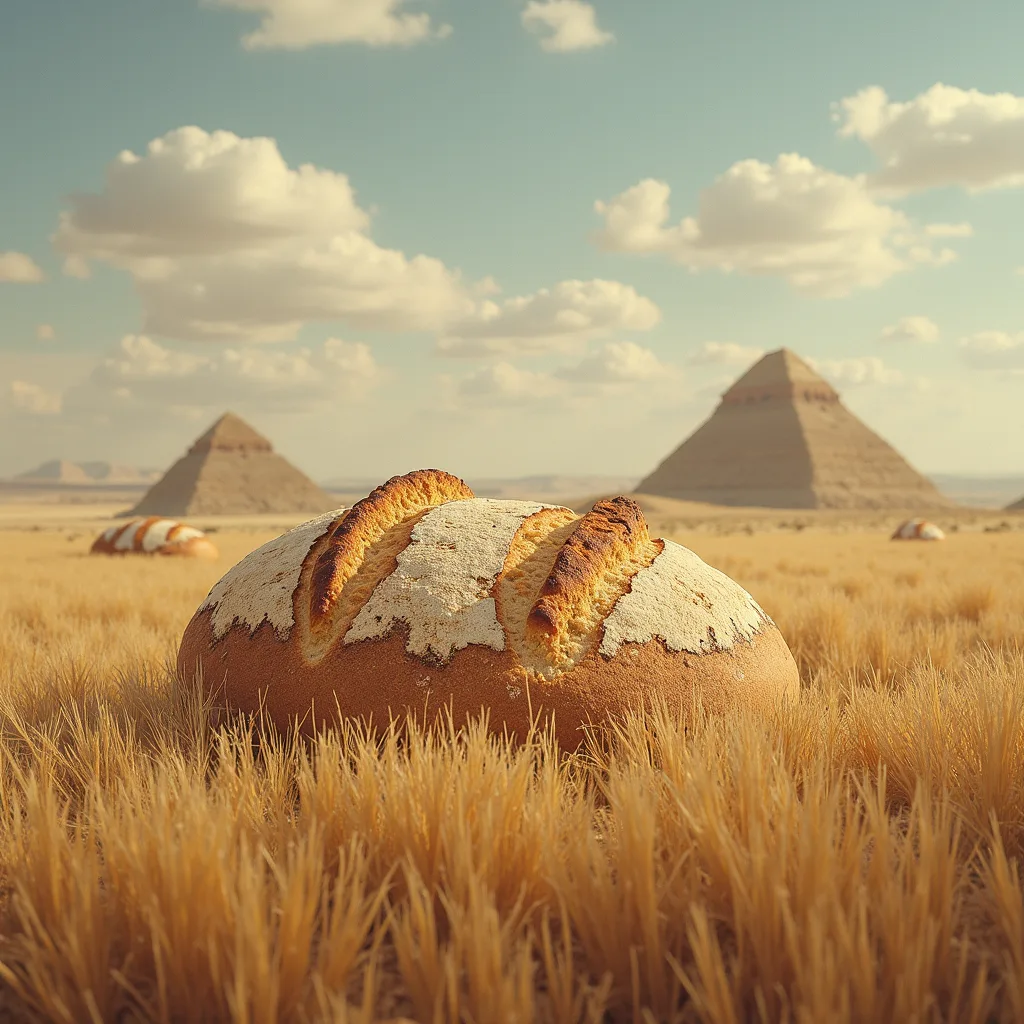
Empires rise and fall. Religions spread and retreat. Languages evolve beyond recognition. But bread persists. The flatbreads of ancient Egypt — made from emmer wheat and baked in clay ovens — are recognizably similar to the aish baladi eaten in Cairo today. The tortilla of 1500 BCE is functionally identical to the tortilla of 2026. Injera's fermentation process hasn't fundamentally changed in centuries.
This persistence isn't nostalgia. It's optimization. When a food technology perfectly matches its grain, climate, nutritional requirements, and social context, there's no reason to change it. The baguette is the optimal expression of wheat flour in the context of French labor laws and social habits. The tortilla is the optimal expression of nixtamalized corn in the context of Mesoamerican agriculture and nutrition. Injera is the optimal expression of teff fermentation in the context of Ethiopian altitude agriculture and communal dining.
Each bread is a local maximum — a solution so well-adapted to its constraints that no variation improves it. Evolution keeps the design. Culture keeps the recipe.
The next time you tear a piece of bread — any bread, from any culture — you're performing an act that connects you to thousands of years of agricultural science, nutritional engineering, social design, and political struggle. The bread on your table didn't just appear. It was fought for, fermented, refined, and defended — sometimes with revolution — by every generation that came before you.
That's not just food. That's civilization, compressed into flour and water.