The Street Food Economy: How Sidewalk Vendors Feed the World
This post contains affiliate links. If you purchase through them, I may earn a small commission at no extra cost to you.
In Bangkok, a woman named Jay Fai cooks crab omelettes over a charcoal fire, wearing ski goggles to protect her eyes from the heat. She works alone. She has no formal training, no investors, no franchise plan. In 2018, she received a Michelin star — the first street food vendor in Thailand to earn one.
Her story is extraordinary and completely ordinary at the same time. Across the globe, approximately 2.5 billion people eat street food every day. The industry generates an estimated $300 billion annually. It employs tens of millions of people, disproportionately women, in economies where formal employment is scarce.
Street food isn't a footnote in the culinary world. It's the foundation.
The Economics of the Sidewalk
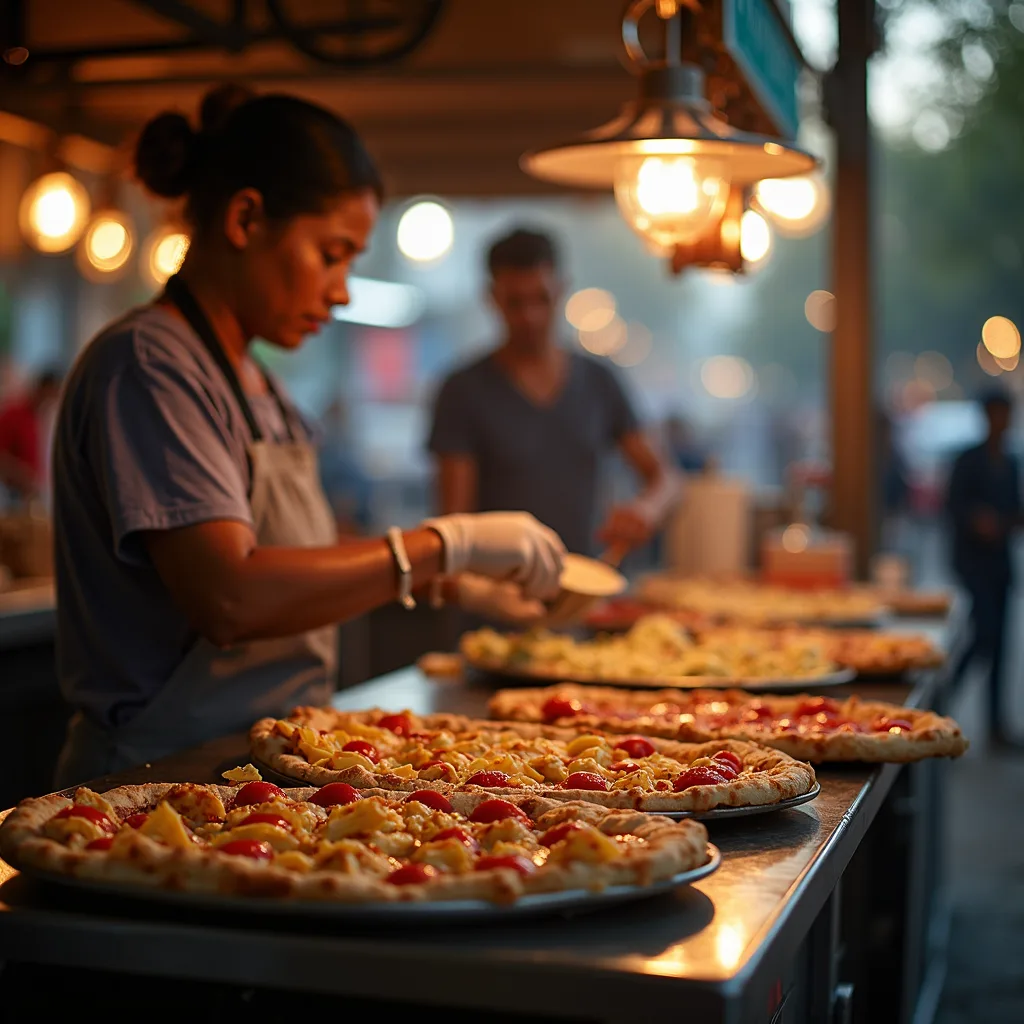
A street food vendor operates on constraints that would terrify a restaurant owner. No commercial kitchen. No walk-in refrigerator. No dishwasher. Often no running water. Ingredients must be bought fresh daily — there's no storage for surplus. Equipment is minimal: a grill, a wok, a cutting board, a few pots. The entire operation fits on a cart or a folding table.
These constraints produce remarkable economic efficiency. Overhead is negligible. A restaurant in New York spends 8-12% of revenue on rent alone. A street vendor's "rent" is the cost of occupying a patch of sidewalk — sometimes an informal fee to local authorities, sometimes nothing at all. Without the fixed cost structure of a brick-and-mortar operation, a street vendor can profitably sell a meal for $1-3 in markets where a restaurant charges $10-30 for the same dish.
This is why street food feeds the working class of the developing world. In Lagos, Manila, Mexico City, and Mumbai, street vendors are the primary food infrastructure for hundreds of millions of people. They fill a gap that formal food systems can't reach — not because the economics of formal restaurants are wrong, but because they're designed for a different customer.
The Specialization Principle
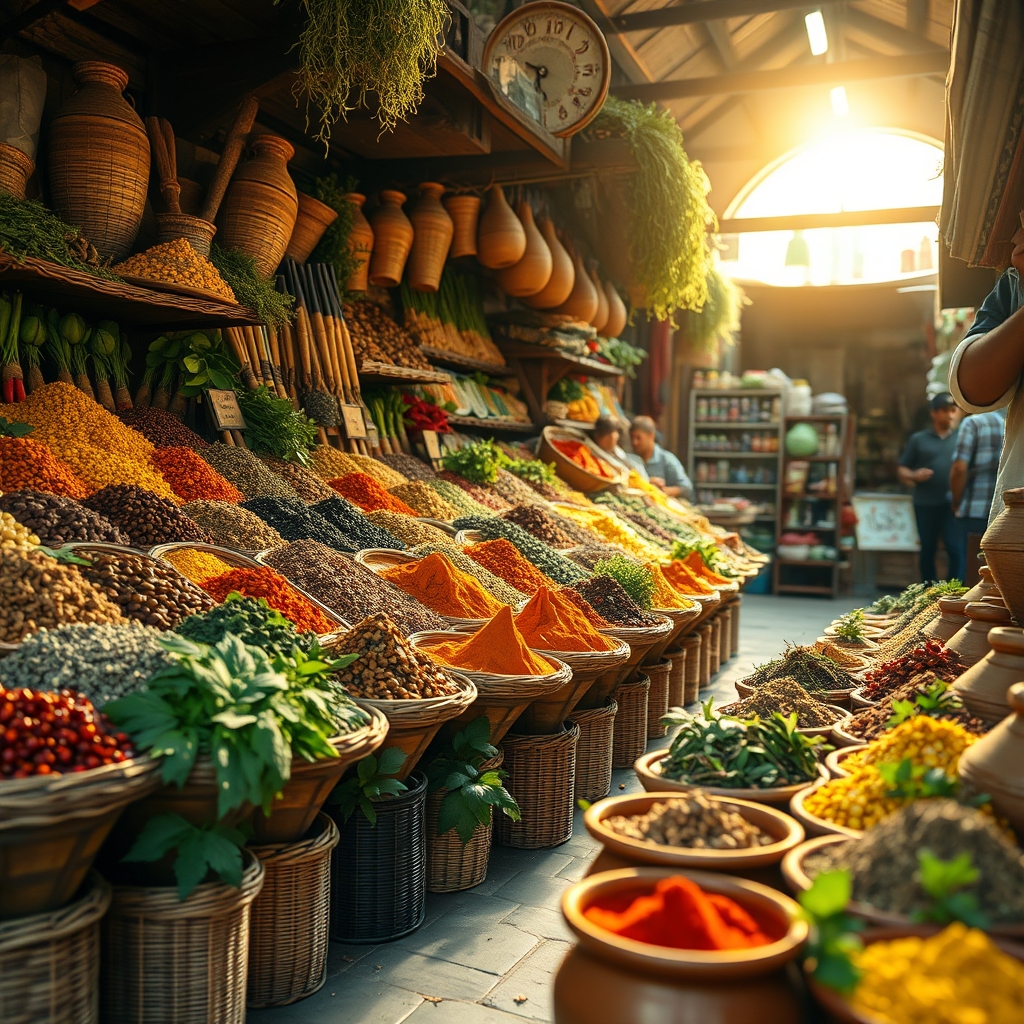
Walk through any serious street food market — Jemaa el-Fnaa in Marrakech, Chatuchak in Bangkok, Mercado de la Merced in Mexico City — and you'll notice something that defies Western restaurant logic: most vendors sell one thing.
One vendor does grilled corn. Another does noodle soup. Another does fresh juice. Another does skewered meat. Each has spent years — sometimes decades — perfecting a single preparation. The noodle soup vendor doesn't also serve rice dishes. The corn vendor doesn't branch into salads.
This extreme specialization produces quality that generalist restaurants struggle to match. When you make the same dish 500 times a day for 20 years, you develop an intuition that no culinary school can teach. You know from the sound of the oil whether it's at the right temperature. You know from the color of the dough whether the hydration is correct. You know from the smell whether the spice blend needs adjustment.
The business logic mirrors the competitive advantage principle: focus creates excellence, and excellence creates demand. As we explored in how spice blends conquered global kitchens, culinary mastery comes from depth, not breadth.
The Women's Economy
Globally, women operate the majority of street food businesses. In West Africa, the figure is estimated at 80-90%. In Southeast Asia, it's approximately 65%. In Latin America, roughly 70%.
The reasons are structural. Street food vending requires low startup capital — often less than $100. It's compatible with childcare (many vendors work near or with their children). It doesn't require formal education, business registration, or credit history. For women in economies where formal employment discriminates against them, street food is often the most accessible path to economic independence.
The Senegalese thiéboudienne vendor, the Nigerian suya seller, the Ghanaian waakye specialist — these women aren't just feeding their communities. They're running micro-enterprises that support families, fund children's education, and build generational wealth one plate at a time.
Anthony Bourdain understood this. He spent his career arguing that the best food in any city wasn't in the Michelin-starred restaurants but at the stalls and carts run by women who'd been cooking the same dish their mothers taught them. The food mattered. But so did the economics behind it — the fact that a woman with a pot and a recipe could build a livelihood that formal economic structures had denied her.
The Recipe as Intellectual Property
Street food recipes are proprietary in ways that formal restaurants rarely achieve. A family's mole recipe in Oaxaca may date back five generations. A pho broth recipe in Hanoi might take 16 hours to prepare and involve dozens of ingredients in proportions known only to the family.
These recipes aren't written down. They're transmitted through demonstration, repetition, and taste — an oral tradition as precise as any written formula. The knowledge is the competitive moat. You can see the ingredients, watch the technique, even taste the final product — and still not be able to replicate it, because the proportions, the timing, and the hundreds of micro-adjustments made by feel are invisible to observers.
This is intellectual property protection without patents, copyrights, or NDAs. The recipe survives because it's embodied in the person who makes it — and because that person learned it from someone who learned it from someone who learned it from someone. As we discussed in recipes that survived empires, culinary knowledge is one of the most durable forms of human memory.
When Street Food Goes Formal
The tension between street food and formal food systems is a recurring story in urban development. Cities periodically crack down on street vendors — citing hygiene, traffic flow, or aesthetic concerns — and each crackdown eliminates food access for the people who can least afford alternatives.
Singapore solved this by building hawker centers — government-built, subsidized food courts where street vendors operate in permanent stalls with running water, drainage, and inspections. The hawker center preserved the economics and quality of street food while addressing legitimate hygiene concerns. In 2020, Singapore's hawker culture was recognized by UNESCO as an Intangible Cultural Heritage of Humanity.
Other cities have taken the opposite approach. Bangkok's periodic street food "cleanups" have displaced thousands of vendors, eliminating livelihoods and reducing food access in low-income neighborhoods. The food doesn't go away — it goes underground, into alleyways and residential areas where hygiene conditions are worse, not better.
The relationship between food and urban planning reveals who cities are actually designed for. When street food thrives, it usually means the city is designed around its working population. When it's eliminated, the city has been redesigned around its property values.
The Lesson at the Cart
Street food is proof that you don't need scale, capital, or technology to build something valuable. You need a product people want, delivered where they are, at a price they can pay. Everything else — the kitchen, the branding, the franchise model — is infrastructure built on top of that fundamental equation.
The woman selling jollof rice from a roadside stall in Accra understands something that many venture-backed startups don't: serve the customer in front of you, do it better than anyone else, and the economics take care of themselves.
Two and a half billion people eat street food every day. The industry predates restaurants by centuries. It will outlast most of the corporations currently trying to disrupt it. Because at the end of the day, the simplest business model — make something good, sell it to someone who's hungry — is also the most durable.