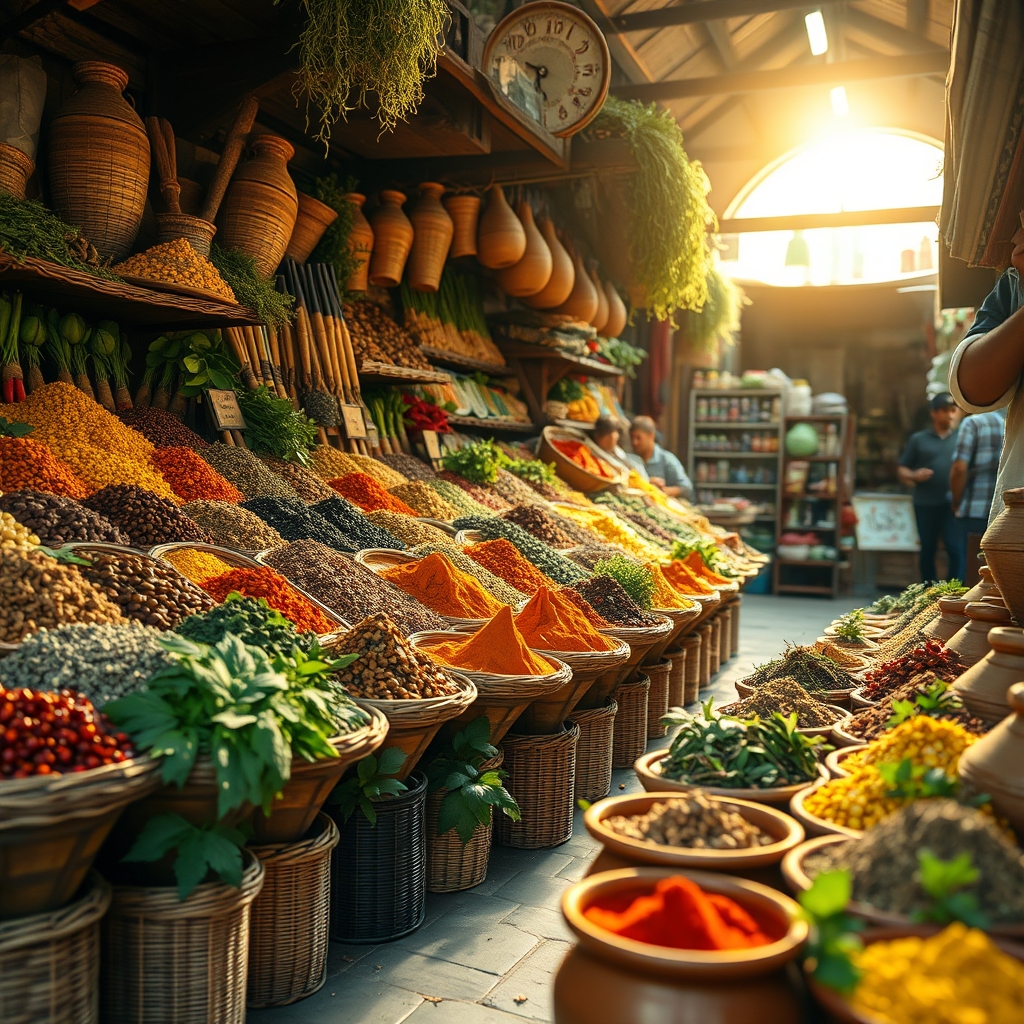
Why Umami Is the Fifth Taste We Ignored for Centuries—and What That Says About Discovery
This post contains affiliate links. If you purchase through them, I may earn a small commission at no extra cost to you.
The short answer: Umami—the savory fifth taste—was scientifically proven in 1908 but dismissed by Western science for a century because we were trapped in the paradigm of four tastes, revealing how discovery requires not just observation but permission to see beyond established categories.
What is umami and why did we miss it for so long?
Umami is the savory, mouth-filling taste produced by glutamates and nucleotides like MSG, and we missed it because Western science committed to the four-taste model so completely that evidence for a fifth taste was treated as heresy rather than data.
In 1908, Japanese chemist Kikunae Ikeda was studying the distinctive flavor in kombu seaweed broth—the same savory sensation you get from aged Parmesan cheese, ripe tomatoes, and slow-cooked beef stock. He identified the compound responsible as glutamate and proposed calling this sensation "umami," meaning "pleasant taste" or "deliciousness" in Japanese. This was rigorous science, supported by chemical analysis and sensory observation.
Yet Western food science largely ignored him. Why? Because the four-taste model—sweet, salty, sour, bitter—had been codified since the 18th century. It had become canonical. Scientists working within that framework literally couldn't see what Ikeda had found because they weren't looking for a fifth category. The receptors for umami were there all along on our tongues, firing in response to glutamates, but without a conceptual box to put them in, the evidence was dismissed as subjective, culturally specific, or simply mistaken.
The Western scientific community didn't formally accept umami as a legitimate taste until 2000—nearly a century later—when umami receptors were identified and mapped on the human tongue. By then, umami had been common knowledge in East Asian cuisines for generations.
How does umami challenge what we think we know about discovery?
Umami reveals that discovery isn't purely objective—it's shaped by the categories we've already decided exist, and paradigm shifts require us to actively challenge the frameworks we inherit rather than just observe more carefully.
This is Thomas Kuhn's paradigm shift in action. Scientists aren't neutral observers collecting facts. They work within paradigms—agreed-upon frameworks about how the world works. The four-taste paradigm was so strong that it functioned as a filter. Data that didn't fit the model was treated as noise.
Consider what happened: Ikeda published his findings in respected journals. Other researchers in Japan and eventually elsewhere replicated his work. But Western science's response was essentially, "Interesting, but it probably doesn't matter." There was no conspiracy, no malice. It was simply the default operation of a paradigm so complete that it felt like reality itself rather than a chosen framework.
This pattern repeats across history. For centuries, scientists dismissed evidence of continental drift because the framework of a fixed Earth dominated geology. Doctors ignored the connection between hand-washing and infection rates because the miasma theory of disease felt complete. We don't miss discoveries because we're not looking—we miss them because we're looking within the wrong categories.
Where is umami actually found in food?
Umami is concentrated in fermented, aged, and slow-cooked foods that naturally accumulate glutamates and nucleotides like inosinate and guanylate, including Parmesan cheese, tomato paste, soy sauce, mushrooms, and bone broth.
The umami-richest foods are often those that have undergone transformation—fermentation, aging, or long cooking breaks down proteins into free amino acids, particularly glutamate. This is why:
- Aged Parmesan is intensely umami—the aging process converts milk proteins into glutamates. A single bite of good Parmigiano-Reggiano triggers that deep, savory satisfaction.
- Tomato paste (especially concentrated or cooked down) concentrates glutamates. Fresh tomatoes contain some umami; cooking and reduction amplify it exponentially.
- Soy sauce, miso, and fish sauce are umami bombs—fermentation creates an environment where glutamates and other amino acids proliferate.
- Mushrooms (especially dried porcini and shiitake) are naturally rich in guanylate, the nucleotide that makes umami pop.
- Bone broth develops umami through hours of slow cooking as collagen breaks down into gelatin and proteins into amino acids.
- Cured meats like Prosciutto and anchovies—the curing process concentrates umami compounds.
When you combine umami-rich foods—Parmesan on tomato pasta, miso in mushroom soup, anchovy in Caesar dressing—you create a synergistic effect. The nucleotides in the mushrooms or fish amplify the glutamates in the cheese or miso, making the umami sensation almost transcendent. This is why certain flavor combinations feel "right" in ways we couldn't previously explain.
Why did Western science reject umami while Asian cuisines embraced it?
Western science rejected umami because the four-taste framework was too established, while Asian culinary traditions had already developed sophisticated understanding of umami-rich ingredients and combinations without needing Western scientific validation.
This reveals something crucial: practical discovery and scientific discovery aren't the same thing. Asian chefs and food cultures had discovered umami centuries before Ikeda named it. They didn't have the vocabulary, but they had the knowledge embedded in their cooking practices. Japanese dashi broths, Chinese use of shiitake mushrooms and soy sauce, Korean fermented pastes—these were all systematically employing umami to build depth and satisfaction in dishes.
The irony is that Western science rejected umami partly due to cultural assumptions. MSG (monosodium glutamate), the pure umami compound, was developed commercially in Japan and became associated with "inauthentic" or "artificial" flavor. When paired with anti-Asian sentiment and the nebulous "Chinese Restaurant Syndrome" scare of the 1960s-70s, umami itself became suspect in the Western mind.
This is where the discovery story becomes uncomfortable: science isn't just separated from culture—it's shaped by it. The gatekeepers of Western food science had preconceptions not just about taste, but about which cuisines were worth taking seriously. If umami had been discovered in Paris instead of Tokyo, the timeline might have been different.
Food writer Harold McGee explores these dynamics in depth in On Food and Cooking, showing how science and culinary tradition inform each other—and how often tradition understands what science hasn't yet.
What does umami teach us about categories and human understanding?
Umami demonstrates that categories aren't discovered—they're invented, and once invented, they become invisible constraints on what we can perceive, making it essential to regularly question whether our existing categories are complete or just conventional.
Here's the deeper lesson: the five tastes aren't laws of physics. They're categories we've created to organize sensory experience. Once created, they feel natural, even inevitable. A child born today learns about five tastes as if these are fundamental truths about the universe, rather than human constructs developed gradually over centuries.
But tastes aren't the only things organized this way. We use categories for everything—types of relationships, kinds of success, styles of leadership, definitions of art. We inherit these categories from culture, education, and tradition. And just like the four-taste model, our current categories might be incomplete. Umami suggests that there are probably other tastes we haven't identified yet, other categories we haven't invented.
More broadly, umami is a case study in how expertise can create blindness. The more sophisticated your framework becomes, the more invisible its limitations grow. A chemist deeply trained in the four-taste model might actually be less likely to notice evidence of a fifth taste than an untrained observer—because they have a more complete-feeling explanation for everything they see.
This connects to what author and entrepreneur Steve Ysreal Monas explores in his work on business and self-discovery: breakthrough thinking often requires not more expertise within an existing system, but willingness to step outside the system and question its foundations. The scientists who eventually accepted umami weren't the most expert in taste science—they were the ones willing to say, "Maybe we're missing something."
Key Definitions
- Umami
- The fifth taste, characterized by a savory, mouth-filling sensation produced by glutamates (amino acids) and nucleotides like inosinate and guanylate. The term is Japanese, meaning "pleasant taste" or "deliciousness."
- Glutamate
- An amino acid that activates umami taste receptors. Found naturally in fermented foods, aged cheeses, tomatoes, and mushrooms. Monosodium glutamate (MSG) is the sodium salt of glutamate.
- Paradigm
- A framework or set of assumptions that shape how scientists and thinkers interpret evidence and organize knowledge. Paradigm shifts occur when the existing framework can no longer explain observed phenomena.
- Taste receptor
- A protein on taste buds that binds to flavor compounds and sends signals to the brain. Umami receptors (mGluR4 and T1R1/T1R3) were identified at the cellular level in 2000.
- Fermentation
- A metabolic process that breaks down organic compounds, typically creating glutamates and other amino acids in foods like soy sauce, miso, and aged cheese.
Related Reading
If you're interested in how culture shapes food understanding, explore Why Cultures Forbid Certain Foods (And What It Reveals), which examines how categories extend beyond taste to entire frameworks of what's edible. For historical context on how cuisines developed and traded, Olive Oil: The Ancient World's Most Valuable Commodity shows how culinary discovery shaped empires, while Coffee: From Ethiopian Goats to Global Commodity reveals how a single flavor experience became powerful enough to transform societies.
For deeper exploration of food science and technique, The Food Lab by J. Kenji López-Alt combines rigorous science with practical cooking, while Salt Fat Acid Heat by Samin Nosrat offers an accessible framework for understanding how tastes interact—a framework built on the foundation umami eventually expanded.
The Bottom Line
Umami's century-long invisibility to Western science wasn't a failure of observation—it was a failure of categories. We had complete sensory access to umami for thousands of years; we simply lacked permission from our inherited framework to call it a taste. This reveals that discovery isn't just about finding what's hidden; it's about being willing to question whether our existing categories are complete. In business, creativity, and personal growth, the umami lesson is clear: the most important breakthroughs often hide not in unexplored territory but in the gaps between our existing categories—waiting for someone willing to say, "Maybe we're missing something."
Frequently Asked Questions
- Is MSG actually bad for you?
- No. The scientific consensus, confirmed by major health organizations including the FDA and WHO, is that MSG is safe for most people. The "Chinese Restaurant Syndrome" panic of the 1960s-70s was not supported by rigorous evidence. MSG is simply the sodium salt of glutamate, an amino acid your body produces naturally. Umami-rich foods like Parmesan cheese contain as much or more glutamate than a typical MSG-seasoned dish, yet face no stigma.
- Can you taste umami with your eyes closed?
- Yes, absolutely. Umami activates specific taste receptors on your tongue just like sweet, salty, sour, and bitter do. You don't need to see food to taste it. The reason umami was historically harder to identify is partly psychological—we expected to find only four tastes, so our brains sometimes categorized umami as "savory" (a combination of tastes) rather than a distinct taste. But blind taste tests confirm umami is perceptually distinct.
- If there are five tastes, could there be more?
- Possibly. Some researchers propose additional tastes like "kokumi" (a mouth-coating sensation from peptides), "calcium taste," or even "fat taste." However, these lack the same level of scientific consensus as the five established tastes. The umami story teaches us to stay humble about categories—what we call complete today might look incomplete tomorrow.