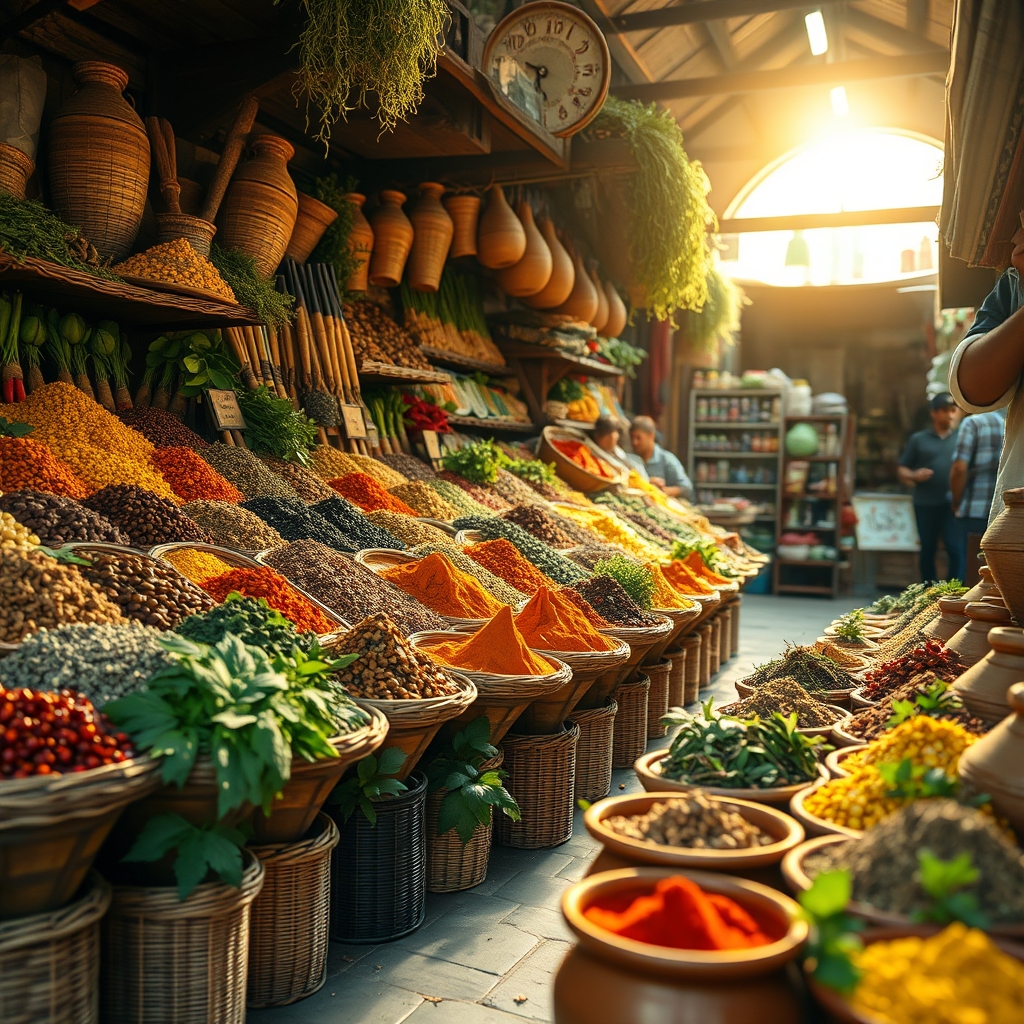
Why Rice Conquered the World While Wheat Fought Wars
This post contains affiliate links. If you purchase through them, I may earn a small commission at no extra cost to you.
The short answer: Rice's ability to grow in flooded paddies enabled denser populations and centralized empires across Asia, while wheat's dependency on plow agriculture in arid climates created scattered farms, property disputes, and the military hierarchies that defined Western civilization.
Why Rice Conquered the World While Wheat Fought Wars
Two grains. Two continents. Two completely different human stories. When you look at how civilizations actually formed, it's not just about which grain grew better—it's about how the grain itself shaped the way people organized power, built armies, settled land disputes, and even thought about property itself. Rice and wheat didn't just feed people. They architected human society.
This isn't a coincidence. And once you see it, you can't unsee it.
What's the difference between how rice and wheat shaped civilizations?
Rice requires centralized hydraulic systems (dams, canals, irrigation) that could only be managed by powerful central governments, while wheat farming spread people across large territories, creating decentralized property disputes and the need for standing armies to defend individual holdings.
Consider the logistics. To grow rice at scale, you need water management infrastructure. You can't just plant rice and hope. You need engineered paddies, irrigation systems that feed multiple farms, seasonal water allocation, and coordinated labor to build and maintain dikes and canals. That level of organization requires a central authority. Someone has to decide who gets water when. Someone has to enforce it. Someone has to maintain the system.
That someone became the emperor, the dynasty, the centralized state.
Wheat works differently. Wheat grows in drier climates where rainfall is less predictable. You plant it, you plow it, you harvest it. The plow itself became the defining technology—expensive enough that it created a class system (those who owned plows, those who didn't), but mobile and decentralized enough that you didn't need a massive bureaucracy to grow it. A family could own a plot, defend it, pass it to their children. This created the feudal model—scattered landholdings, local lords, and constant warfare over borders and property rights.
Two grains. Two totally different power structures.
Why did rice-based empires become more stable than wheat-based kingdoms?
Rice-based empires had self-reinforcing bureaucracies because the irrigation infrastructure tied all farmers to the state, while wheat-based kingdoms fragmented into feudal territories where constant succession wars and property disputes destabilized central authority.
Look at China. The Han Dynasty, the Tang, the Ming—these weren't just kingdoms that happened to last a long time. They lasted because the rice-paddy system created a dependency loop. Farmers needed the irrigation system to survive. The central government controlled the irrigation system. Therefore, farmers needed the government. And the government, in return, could tax the surplus that intensive rice agriculture produced.
This created what historians call the "Hydraulic Hypothesis"—the idea that water management wasn't just agriculture, it was politics. Maintain the canals, and you maintain power. Fail to maintain them, and you lose legitimacy. Medieval Chinese dynasties fell not because armies defeated them, but because they couldn't maintain the dike systems during droughts or floods. Farmers starved. The government lost its mandate.
European wheat-based kingdoms faced a different problem: fragmentation. A king couldn't tax wheat the way a Chinese emperor taxed rice because the wealth was distributed. Nobles owned land, grew their own grain, and had no reason to surrender power to a distant monarch. This created feudalism—a decentralized power structure where the central king was almost ceremonial. Real power belonged to dukes and earls and bishops who controlled specific territories.
The result? Constant warfare. If you're a feudal lord and the king next to you is weak, you fight to expand your territory. You can't control him through bureaucracy (he doesn't need your irrigation system). You can only fight him. Wheat civilizations fought wars. Rice civilizations fought droughts.
How did grain agriculture affect population density and social organization?
Rice paddies supported 3-5 times more people per square mile than wheat farmland, which concentrated populations into hierarchical administrative structures and created the conditions for larger, more organized civilizations.
The numbers are striking. A hectare of rice-paddy land, properly irrigated and maintained, can feed roughly 10-15 people. The same hectare of wheat land feeds 3-5. This isn't just a productivity difference—it's a civilization-building difference.
High population density requires coordination. You can't have 15 people sharing a hectare of land without someone managing conflicts, distributing resources, and enforcing rules. You need a system. You need administration. You need bureaucracy.
This is why Chinese and Indian civilizations developed elaborate civil service systems, written exams for government positions, and hierarchical administrative structures centuries before Europe did. The density required it. When you have a million people in a region, you can't govern by personal relationships and feudal allegiances. You need records. You need laws. You need officials who are appointed based on merit rather than birthright.
Wheat societies had the opposite problem and the opposite solution. Spread out populations created local autonomy. Each lord governed their own territory. This is why feudalism worked—it was a system designed for low-density, decentralized populations. You didn't need a massive bureaucracy because you didn't have massive populations in a concentrated area.
What role did grain storage play in economic power?
Rice's vulnerability to spoilage and pests required constant redistribution and state management of grain stores, while wheat's durability allowed individual merchants and lords to accumulate and hoard grain, creating decentralized wealth and commodity markets.
Here's a detail most people miss: rice and wheat degrade differently in storage. Wheat is hardy. You can store it for years without major loss. Rice, especially in humid climates, is vulnerable to insects, mold, and spoilage. This might sound trivial, but it's not. It shaped entire economic systems.
Because rice spoils, Chinese and Indian governments couldn't allow private hoarding. They had to actively manage grain stores—collecting taxes in grain, storing it in state granaries, and redistributing it during shortages. This centralized all grain wealth in state hands. It also meant that famines, while still devastating, could be managed through government redistribution. The state had the infrastructure to move grain from surplus regions to deficit regions.
Wheat's durability meant something different. A merchant could buy wheat, store it, and wait for prices to rise. A lord could accumulate grain wealth without state interference. This created independent merchant classes and financial markets. Medieval Europe had commodity traders who operated independent of the crown. They made fortunes. They built banks. They created the conditions for capitalism.
One grain created state control of the economy. One grain created merchant capitalism. And this wasn't because Europeans were smarter or more entrepreneurial. It was because wheat rots slower than rice.
How did these grains influence military organization and technology?
Rice-based empires built professional standing armies supported by state tax systems, while wheat-based kingdoms relied on feudal levies and developed cavalry and heavy armor technology to defend scattered landholdings.
Military history tells the story too. Chinese dynasties, supported by rice-tax revenue, could afford to maintain large standing armies year-round. Soldiers didn't farm—they were full-time military professionals. They were paid in grain from state stores. This created the conditions for sophisticated military tactics, drill formations, and long-term strategic planning.
European knights, by contrast, were landholders first and soldiers second. They fought when their feudal duty required it, then returned to their estates. Armies couldn't stay mobilized for long because no central authority was funding them. This meant quick battles decided by individual combat and cavalry charges, not coordinated formations. Heavy cavalry and plate armor developed because knights had to be individually formidable. The state couldn't provide the numbers, so it provided equipment.
This is why Chinese armies used pikes and formations while European armies used horses and armor. Not because of cultural preference. Because of how their grain grew.
Key Definitions
- Hydraulic Empire
- A centralized state whose power depends on controlling water infrastructure (dams, canals, irrigation) necessary for agriculture. The concept explains why rice-based civilizations developed strong central governments while wheat-based societies remained decentralized.
- Feudalism
- A decentralized power structure where a weak central king grants land to nobles in exchange for military service, creating a hierarchy of landholders with local autonomy. This system emerged naturally in wheat-based societies with scattered populations and dispersed wealth.
- Agricultural Surplus
- The grain produced beyond what a farmer needs for personal consumption. Larger surpluses (like those from rice paddies) allow states to feed non-farming populations (soldiers, bureaucrats, priests) and concentrate wealth in central authorities.
- Commodity Market
- An economic system where goods are bought and sold for profit based on price fluctuations. Wheat's durability enabled merchants to store grain and speculate on prices, creating financial markets independent of state control.
Why understanding grain matters to you
This isn't just history. This is how to think about causation in civilization.
We often tell stories about great leaders, bold ideas, and cultural values shaping history. Sometimes that's true. But often, the real driver is something mundane—the ecological constraints of a plant. Rice required infrastructure. Infrastructure required hierarchy. Hierarchy created empires. Wheat created scatter. Scatter created feudalism. Feudalism created democracy (eventually, through the Magna Carta and limited monarchy). Different grain, different political outcome.
This pattern repeats everywhere. If you want to understand why societies develop differently, don't start with culture or values. Start with the environment. Start with what grows. Because what grows determines what people need to do to survive, and what people need to do determines how they organize power.
Understanding this—that the physical world constrains human possibility—is liberating. It means you're not blaming people for "choosing" bad systems. You're understanding the logic of why those systems emerged in the first place. And if you understand the logic, you can imagine alternatives.
For deeper dives into how food shapes civilization, explore Five Cooking Techniques That Changed Human History and The Tomato Paradox: How a Poisonous Fruit Conquered World Cuisine. For the science of food itself, The Food Lab and On Food and Cooking provide fascinating context on how ingredients have been understood across cultures.
The Bottom Line
Rice and wheat didn't just feed people—they architected entirely different civilizations. Rice's dependence on irrigation infrastructure created centralized empires with professional bureaucracies and standing armies, while wheat's adaptability to scattered farmland created feudal hierarchies, independent merchants, and eventually, competitive nation-states. The grain you grow determines the government you build.
Frequently Asked Questions
- Did rice actually create more stable civilizations than wheat?
- Yes, but "stable" is nuanced. Rice-based empires like China experienced longer dynastic periods due to self-reinforcing bureaucratic systems tied to irrigation management. However, they also experienced devastating famines when systems failed. Wheat-based kingdoms fragmented into feudalism, creating constant warfare, but also eventually evolved democratic institutions. Neither was universally "better"—they simply created different types of stability and instability.
- Why didn't European wheat farmers develop centralized irrigation like Asian rice farmers?
- European climate and geography made large-scale irrigation unnecessary. Wheat thrives in seasonal rainfall, plow agriculture can sustain itself without state irrigation infrastructure, and the scattered landholding system that emerged actually discouraged collective irrigation projects. If irrigation had been necessary for survival, Europe would likely have developed centralized states earlier. The technology wasn't the barrier—the environment didn't demand it.
- Could wheat-based societies have developed centralized governments?
- They could have, but it required different infrastructure. The answer came through military conquest (Rome), religious organization (the Church), or coastal trade (Venice, Hanseatic League). These alternatives to irrigation created centralization, but without the direct economic feedback loop that rice irrigation provided. This is why centralized wheat empires like Rome required constant military expansion to maintain power, while rice empires could sustain central authority through internal economic organization.