The Lost City of Petra: Uncovered
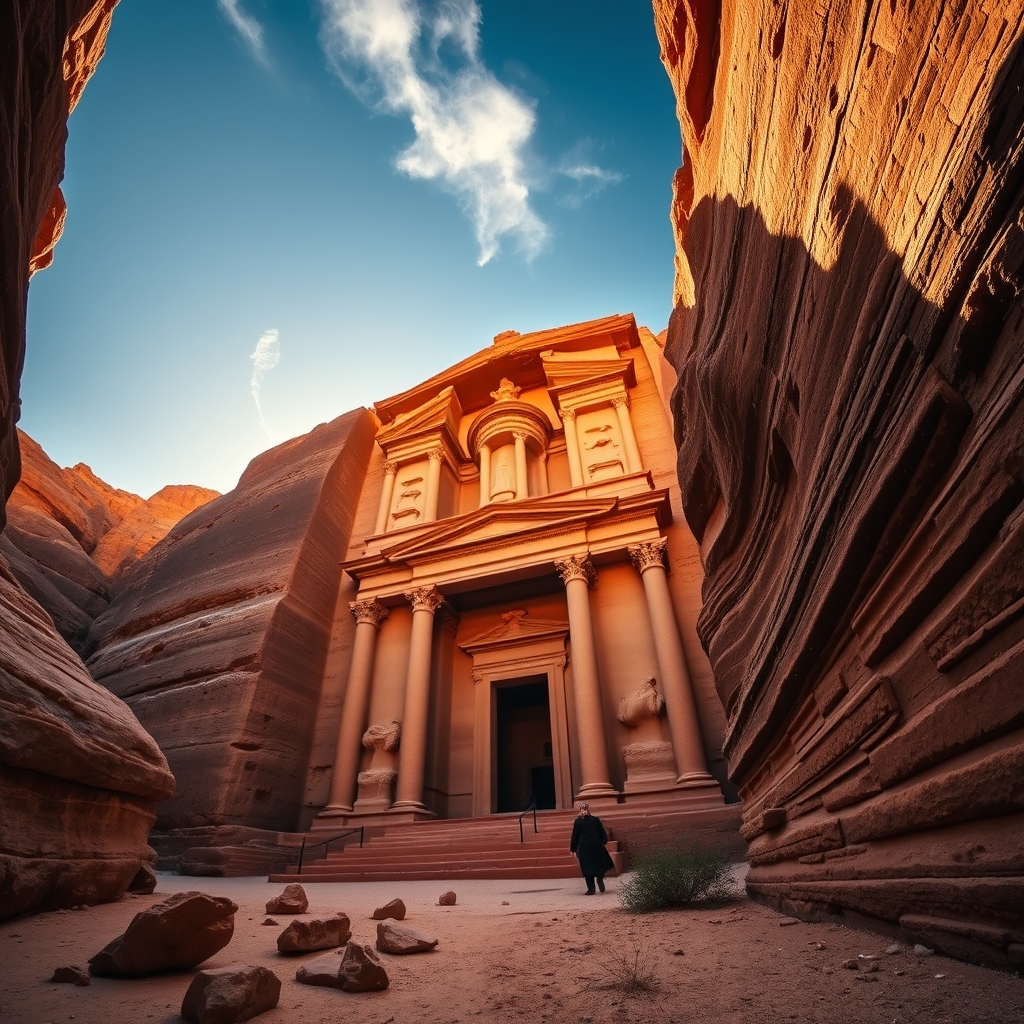
I still remember the first time I laid eyes on the ancient city of Petra, nestled deep within the rugged mountains of Jordan. The intricate facades, carved directly into the sandstone cliffs, left me breathless. As I delved deeper into the ruins, I couldn't help but feel a sense of awe at the ingenuity and craftsmanship of the Nabataeans, the civilization that once called Petra home. Unraveling the secrets of this ancient city is a journey that has fascinated historians and archaeologists for centuries, and one that I am eager to share with you.
Petra's strategic location, at the crossroads of ancient trade routes, made it an ideal hub for the exchange of goods, ideas, and cultures. The city's unique blend of Greek, Roman, and Middle Eastern influences is evident in its architecture, which reflects the cultural diversity of its inhabitants. From the majestic Treasury building, with its ornate facade and intricate carvings, to the Royal Tombs, with their imposing presence and stunning views, every aspect of Petra seems to whisper tales of a bygone era.
As I wandered through the narrow canyon known as the Siq, the main entrance to the city, I was struck by the sheer scale and grandeur of the surrounding landscape. The towering cliffs, with their vibrant hues of red, orange, and purple, seem to glow with an otherworldly light, as if infused with the spirit of the city itself. And yet, despite its natural beauty, Petra remains a testament to human ingenuity and perseverance, a reminder that even the most seemingly insurmountable challenges can be overcome with determination and creativity.
Uncovering the History of Petra
My journey to uncover the secrets of Petra took me deep into the heart of the city, where I discovered a complex network of temples, theaters, and monuments, each with its own unique story to tell. The Nabataeans, who built Petra over 2,000 years ago, were a resourceful and adaptable people, skilled in the art of water management and agriculture. They developed a sophisticated system of pipes and channels, which allowed them to harness the power of the surrounding landscape and create a thriving oasis in the desert.
As I explored the city, I was struck by the sense of community and cooperation that seemed to permeate every aspect of Nabataean life. From the grand monuments, built to honor the gods and the ruling elite, to the humble homes and workshops, where ordinary people lived and worked, every aspect of Petra seems to reflect a deep sense of social cohesion and shared purpose. And yet, despite its many achievements, the city was not without its challenges, from the constant threat of invasion and conquest to the harsh realities of life in the desert.
Despite these challenges, Petra flourished for centuries, becoming a major center of trade and commerce in the ancient world. The city's unique blend of cultures and influences, combined with its strategic location, made it an ideal hub for the exchange of goods and ideas. From the spices and textiles of the East to the wines and olive oils of the West, Petra was a city that thrived on diversity and exchange, a true melting pot of ancient civilizations.
Exploring the Ruins of Petra
As I made my way through the ruins of Petra, I was struck by the sense of wonder and discovery that seemed to await around every corner. From the majestic Monastery, perched atop a mountain peak, to the intimate Street of Facades, with its intricate carvings and ornate details, every aspect of the city seems to hold a secret or a surprise. And yet, despite the many wonders of Petra, it is the people who once called the city home that truly bring the ruins to life.
The Nabataeans, with their rich culture and traditions, were a people who lived in harmony with the surrounding landscape, respecting the power of nature and the beauty of the desert. As I walked through the ruins, I couldn't help but feel a sense of connection to the people who once lived and worked in Petra, people who were not so different from ourselves, with their hopes and fears, their triumphs and struggles. And it is this sense of connection, this sense of shared humanity, that truly makes Petra come alive.
As the sun began to set, casting a golden glow over the city, I found myself at the Treasury building, surrounded by the majestic facades and intricate carvings that have made Petra famous around the world. It was a moment of perfect tranquility, a moment that seemed to capture the essence of the city and its people. And as I stood there, taking in the beauty and wonder of Petra, I knew that I had truly uncovered the secrets of this ancient city, secrets that would stay with me forever.
Petra's Lasting Legacy
As I reflect on my journey to Petra, I am reminded of the enduring power of human creativity and ingenuity. The city, with its intricate facades and majestic monuments, is a testament to the boundless potential of the human spirit, a reminder that even the most seemingly insurmountable challenges can be overcome with determination and perseverance. And yet, Petra is more than just a testament to human achievement; it is a living, breathing entity, a city that continues to inspire and captivate people from around the world.
Today, Petra is a UNESCO World Heritage site, attracting millions of visitors each year. And yet, despite its popularity, the city remains a place of mystery and wonder, a place where the past and present seem to blend seamlessly together. As I look back on my journey to Petra, I am reminded of the importance of preserving our cultural heritage, of protecting the ancient cities and monuments that make us who we are. For in the end, it is not just the stones and the ruins that make Petra so special, but the people and the stories that bring the city to life.
I explored a related angle in Unveiling the Secrets of Angkor Wat if you want to keep pulling this thread.
In the end, my journey to Petra was a journey of discovery, a journey that took me deep into the heart of human history and culture. It was a journey that reminded me of the power of human creativity and ingenuity, and the importance of preserving our cultural heritage for future generations. And as I look back on the experience, I am filled with a sense of wonder and awe, a sense of gratitude for the opportunity to uncover the secrets of this ancient city, and to share them with the world.