The Trade Routes That Built Civilizations (And Weren't the Silk Road)
This post contains affiliate links. If you purchase through them, I may earn a small commission at no extra cost to you.
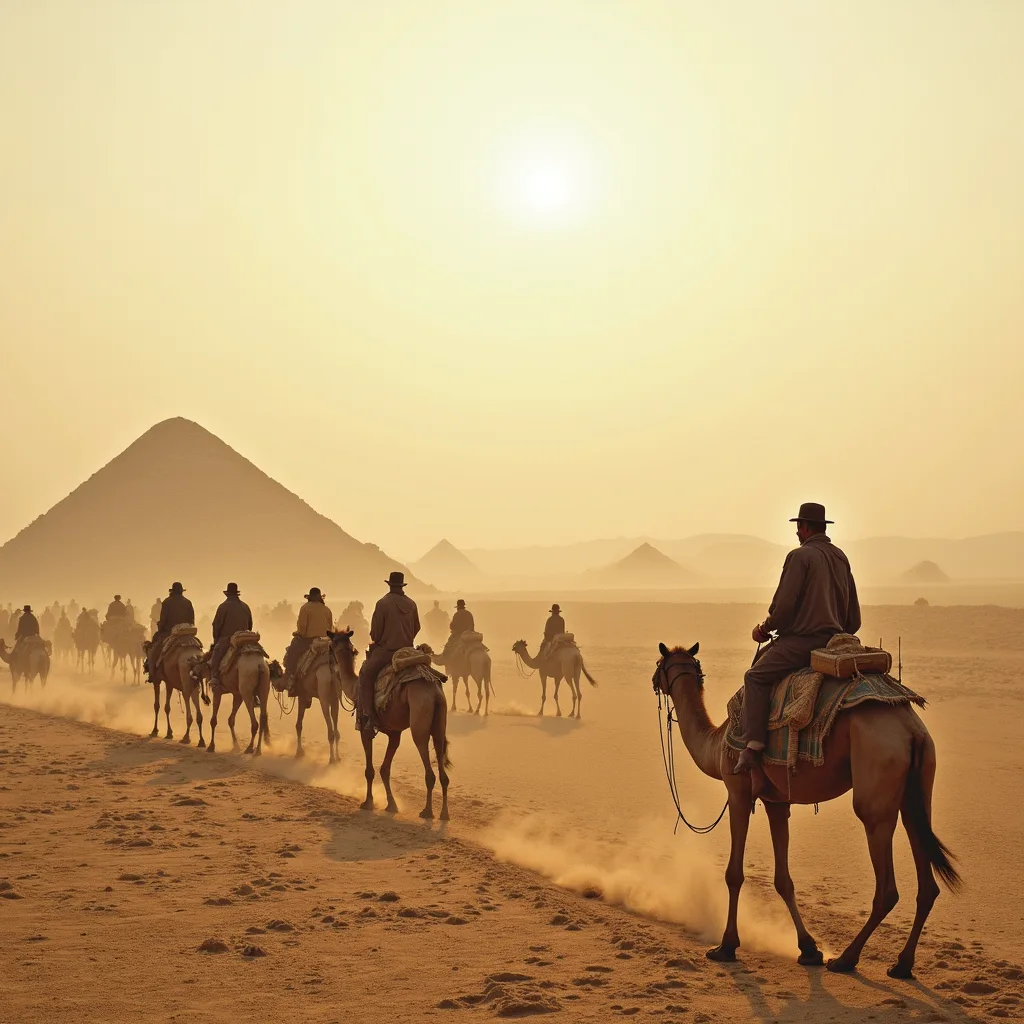
Everyone knows the Silk Road. Caravans crossing deserts. Spices and silk moving from China to Rome. The romantic image of merchants braving bandits and sandstorms.
That's the story we tell. But it's not the whole story.
The real wealth of the ancient world didn't move by camel. It moved by ship. And the trade routes that built civilizations weren't the ones connecting East to West overland—they were the maritime networks that nobody talks about.
The Swahili Coast. The Indian Ocean monsoon circuit. The Southeast Asian maritime empire of Srivijaya. These weren't footnotes. They were economic superpowers that shaped history more than most textbooks admit.
Here's why they mattered—and why the Silk Road gets too much credit.
Why the Silk Road Is Overrated
Don't misunderstand: the Silk Road was real, and it mattered. But it was slow, dangerous, and expensive.
A caravan traveling from Chang'an (modern Xi'an) to Rome could take two years. Goods passed through dozens of middlemen. Each one took a cut. By the time Chinese silk reached the Mediterranean, it cost 100 times what it sold for in China.
Compare that to maritime trade. A ship could carry 500 times more cargo than a camel caravan. The journey from India to Egypt via the Red Sea took weeks, not years. Costs were a fraction of overland routes.
And yet, when we talk about ancient trade, we default to the Silk Road. Why?
Because it's romantic. Desert crossings. Oasis cities. Marco Polo. It fits the narrative we want: brave adventurers conquering the unknown.
Maritime trade doesn't have that romance. It's just efficient. Merchants loading ships, riding monsoon winds, making fortunes. Less glamorous. More profitable.
The Silk Road gets the headlines. But the money was at sea.
The Indian Ocean: The Real Center of the Ancient Economy
If you want to understand ancient trade, start with the monsoons.
The Indian Ocean has predictable seasonal winds. From April to October, winds blow from the southwest—perfect for sailing from Africa and Arabia to India. From November to March, they reverse—ideal for the return journey.
Ancient sailors figured this out at least 2,000 years ago. Probably earlier.
That discovery turned the Indian Ocean into a trade highway. Ships could make round trips every year. Merchants in Alexandria could buy spices from India, incense from Arabia, gold from East Africa—all without ever setting foot on the Silk Road.
The Periplus of the Erythraean Sea, a Greek merchant's handbook from the 1st century CE, describes this network in detail. It lists ports from Egypt to India, naming what each one exported and imported. It's a business manual, not a travelogue. And it reveals something historians often miss:
The Indian Ocean trade network was older, richer, and more sophisticated than the Silk Road.
By the time Romans were romanticizing caravans crossing Persia, Indian merchants had been sailing to East Africa for centuries. Arab traders controlled the incense routes from Yemen. Tamil sailors dominated the Bay of Bengal.
This wasn't some primitive barter system. It was a globalized economy. Goods from Southeast Asia ended up in Rome. African ivory reached China. Indian textiles were sold in Yemen. All by sea.
The Swahili Coast: Africa's Forgotten Trade Empire
Most people don't associate medieval Africa with maritime empires. That's a gap in their education.
From roughly 800 CE to 1500 CE, the Swahili Coast—stretching from modern Somalia to Mozambique—was a network of wealthy, cosmopolitan city-states. Kilwa. Mombasa. Zanzibar. Sofala.
These weren't villages. They were cities. Stone buildings. Mosques. Palaces. The Great Mosque of Kilwa, built in the 11th century, rivals anything in Europe from the same period.
Their wealth came from trade. Swahili merchants exported gold, ivory, and enslaved people (a grim reality we can't ignore). They imported textiles from India, porcelain from China, glassware from Persia.
Archaeologists have found Chinese ceramics in Swahili ruins dating back to the 9th century. That means direct or near-direct trade between East Africa and China—500 years before Columbus.
And yet, how many history classes talk about Kilwa? How many people know that Swahili city-states minted their own coins, conducted diplomacy with sultans in Oman, and controlled trade routes that stretched from Madagascar to India?
The Swahili Coast was a maritime superpower. But because it doesn't fit the "Africa was isolated" narrative, it's been downplayed or erased.
Srivijaya: The Empire Nobody Taught You
Here's a question: what was the wealthiest empire in Southeast Asia between 600 and 1200 CE?
Not Angkor (though that's a good guess). Not the Khmer Empire (close).
The answer is Srivijaya—a maritime empire based in Sumatra that controlled the Strait of Malacca, the narrow waterway between the Indian Ocean and the South China Sea.
Every ship traveling between China and India had to pass through that strait. Srivijaya taxed them. Heavily.
The empire didn't conquer land. It didn't need to. It controlled water. And in a world where maritime trade was king, controlling a chokepoint like Malacca was worth more than owning half a continent.
Srivijaya was so wealthy that Chinese emperors sent diplomatic missions just to maintain good relations. Arab geographers wrote about its ports. Indian merchants paid tribute.
But here's the kicker: we don't even know where its capital was.
Seriously. Historians debate whether it was Palembang, Jambi, or somewhere else entirely. The empire left few monuments. It didn't build pyramids or temples like Angkor Wat. It built ships.
That's why Srivijaya is forgotten. Its wealth was mobile. Its power was fluid. It doesn't fit the model of "great civilizations" we're taught—which is exactly why it's worth studying.
The Spice Trade: How Nutmeg Shaped Empires
Let's talk about nutmeg.
Today, it's a $2 jar in your spice rack. In the 16th century, it was worth more than gold.
Why? Because nutmeg only grew in one place: the Banda Islands, a tiny archipelago in what's now Indonesia.
For centuries, Arab and Indian traders controlled the supply. They bought nutmeg from Southeast Asian merchants, sold it in the Middle East, and charged exorbitant markups. Europeans didn't even know where it came from. They just knew they wanted it—for medicine, food preservation, and as a status symbol.
When Portuguese explorers found the Banda Islands in 1512, they tried to monopolize the trade. The Dutch followed. The British got involved. Wars were fought. Entire populations were displaced or killed.
In 1667, the Dutch traded Manhattan to the British in exchange for Run Island—one of the Banda Islands.
Read that again. The Dutch gave up New York for a nutmeg island.
That's how valuable spices were. And that's how central maritime trade was to global power.
The spice trade wasn't just commerce. It was geopolitics. Controlling spice routes meant controlling wealth. And wealth meant empire.
What Maritime Trade Teaches Us About Power
Here's the lesson: geography is destiny, but only if you know how to use it.
The Silk Road connected empires, yes. But it didn't create them. It was a byproduct of existing power—Rome, Persia, China.
Maritime trade routes created power. Cities like Kilwa, Srivijaya, and Venice didn't start as empires. They started as ports. They became empires because they controlled flow.
Flow of goods. Flow of information. Flow of people.
Land-based empires needed armies to expand. Maritime empires needed ships. And ships are cheaper than legions.
That's why small city-states—Venice, Genoa, the Swahili ports—could compete with vast territorial empires. They didn't need to conquer. They just needed to control trade.
And trade, by its nature, is voluntary. You can't force people to buy from you. You have to offer something they want, at a price they'll pay, delivered reliably.
That's a different kind of power. Not conquest. Incentive.
Why This Matters Today
The same dynamics still apply.
Today's "Silk Road" is the internet. Information flows instantly. Commerce is global. Geography matters less than it used to—but control points still matter.
Who controls payment systems? Who controls search engines? Who controls logistics networks?
Amazon doesn't conquer territory. It controls flow. Same with Google. Same with Visa.
The principle is ancient: whoever controls the chokepoints controls the wealth.
In the medieval world, that was the Strait of Malacca, the Red Sea, the Bosphorus. In the modern world, it's server farms, undersea cables, and API gateways.
The tools change. The strategy doesn't.
What the Textbooks Get Wrong
When I was in school, ancient trade was taught like this:
Rome traded with China via the Silk Road. Some spices came from India. Africa was mostly isolated. Southeast Asia was a backwater.
That's not just incomplete. It's wrong.
The reality:
- Africa was integrated into Indian Ocean trade for over a millennium before Europeans arrived.
- Southeast Asia was central to global commerce, not peripheral.
- Maritime routes moved more wealth than overland routes—by far.
- The "East" and "West" weren't separate. They were interconnected via multiple networks, most of which were maritime.
Why does the standard narrative ignore this?
Partly because European historians wrote most of the textbooks. And Europe was peripheral to these networks until relatively late.
Romans imported silk and spices, yes. But they were consumers, not producers or controllers. The real action—the production, the shipping, the profit—happened in the Indian Ocean world.
Europe only became central when it developed ocean-going ships capable of bypassing Middle Eastern middlemen. And even then, they were playing catch-up to networks that had existed for centuries.
The Silk Road narrative flatters European/Western centrality. The maritime trade narrative doesn't. That's why one gets taught and the other gets footnoted.
The Merchant As Diplomat
One more thing worth noting: in maritime trade networks, merchants weren't just traders. They were diplomats.
A merchant sailing from Kilwa to Calicut (India) needed more than goods. They needed:
- Language skills – Swahili, Arabic, Tamil, Malayalam
- Cultural fluency – Knowing local customs, religious practices, negotiation styles
- Legal knowledge – Understanding different port regulations, tariffs, contract enforcement
- Political awareness – Navigating rivalries between city-states, sultanates, kingdoms
Successful merchants were cosmopolitan by necessity. They had to operate across cultures, languages, legal systems. They were multilingual, adaptive, and skilled negotiators.
Compare that to a tax collector in a territorial empire. He enforces the emperor's will. He doesn't negotiate.
Merchants had to persuade. That's a different skill set. And it created a different kind of society—one where soft power mattered as much as hard power.
That's why port cities were often more tolerant than inland capitals. Diversity wasn't just moral—it was profitable. Expelling foreigners meant losing trade.
The Decline of Maritime Empires
So what happened? Why did maritime trade empires like Srivijaya and the Swahili city-states decline?
Two reasons: European colonialism and technological shifts.
When Portuguese, Dutch, and British ships arrived in the Indian Ocean, they didn't just trade. They conquered. They built forts. They imposed monopolies. They used naval superiority to shut out competitors.
The old system relied on cooperation and mutual benefit. European powers introduced a new model: exclusion. They didn't want to participate in the network. They wanted to own it.
Second, technology changed. Larger ships, better navigation, and eventually steam power made it possible to bypass traditional routes. The Suez Canal (1869) made the Red Sea route faster. Railroads made overland trade viable again.
By the 19th century, the old maritime networks were obsolete. Not because they failed—but because the rules of the game changed.
That's the fate of all trade empires, eventually. They thrive until a new technology or power structure renders their advantages irrelevant.
What We Lost
When we focus on the Silk Road and ignore maritime trade, we lose more than historical accuracy. We lose models.
The Silk Road model is one of conquest and control. Empires expand. They dominate. They extract.
The maritime trade model is one of connection and exchange. Cities specialize. They cooperate (often). They profit by facilitating, not hoarding.
Both models exist today. But we talk more about the first one.
Maybe if we studied Srivijaya as much as we study Rome, we'd have a different framework for thinking about power.
Maybe if we taught the Swahili Coast alongside the Silk Road, we'd understand that wealth doesn't require conquest.
Maybe if we acknowledged that maritime trade built more civilization than overland caravans, we'd ask different questions about how economies work.
History isn't just about what happened. It's about which stories we choose to tell.
And the stories we ignore shape us as much as the ones we remember.
Want to explore the hidden patterns of history? My book Forgotten Geniuses of Mesopotamia uncovers the overlooked innovations that shaped civilization—from ancient trade networks to bureaucratic systems that still influence us today.
Related Reading
If this resonated, you might also find value in:
- The World's First Accountants (And Why They Mattered) – How ancient bureaucracy enabled trade at scale
- The Writing System That Vanished Overnight – What happens when civilizations collapse
- Books on Indian Ocean Trade on Amazon – Deep dives into maritime history
- Ancient Trade Routes on Amazon – Exploring global commerce before Columbus