The Sauce That Defines a Culture
This post contains affiliate links. If you purchase through them, I may earn a small commission at no extra cost to you.
Ask someone what defines Italian cooking and they'll say pasta, olive oil, tomatoes. Ask about Japanese food and they'll say sushi, ramen, rice. But those are ingredients and dishes. The real DNA of a cuisine — the thing that makes a thousand different recipes taste unmistakably like home — is the sauce. The base. The mother flavor that everything else is built on.
Every great culinary tradition has one. And when you study these foundational sauces, you're not just learning recipes. You're reading centuries of history compressed into a spoonful.
Dashi: The Invisible Architecture of Japanese Food
Dashi is the most important thing most Westerners have never heard of. It's a stock — deceptively simple — made from kombu (dried kelp) and katsuobushi (dried, smoked, fermented skipjack tuna shaved into translucent flakes). The process takes about fifteen minutes. The result is the foundation of essentially all Japanese cooking.
Miso soup, ramen broth, tempura dipping sauce, the glaze on your teriyaki, the braising liquid for simmered vegetables — all dashi. It's the reason Japanese food has that deep, savory quality that's hard to articulate but impossible to miss. In 1908, chemist Kikunae Ikeda was so obsessed with identifying what made dashi taste the way it did that he isolated glutamic acid from kombu and coined the word umami — literally "pleasant savory taste." An entire category of human flavor perception was named because one scientist couldn't stop thinking about dashi.
But here's what makes dashi a cultural artifact: it encodes Japan's geography. An island nation with limited arable land, surrounded by ocean, with volcanic soil that grows extraordinary seaweed. The sea and the land meet in a bowl of stock. Dashi doesn't just taste like Japan. It is Japan — its constraints, its resourcefulness, its aesthetic of extracting maximum beauty from minimum material.
Sofrito: The Heartbeat of the Latin World
Sofrito is not one thing. It's a family of aromatic bases that spans from Spain to Puerto Rico to Cuba to the Dominican Republic, shifting ingredients at every border but maintaining the same essential role: the flavor foundation that everything else is built on top of.
Spanish sofrito is onion, garlic, and tomato, slow-cooked in olive oil until it collapses into a jammy concentrate. Puerto Rican sofrito replaces the tomato with ají dulce peppers and cilantro, adding recao (culantro) for a greener, more herbaceous punch. Cuban sofrito layers in cumin and oregano. Dominican sofrito might include bell peppers and celery.
The variations trace migration routes. When Spaniards arrived in the Caribbean, they brought their technique — the slow aromatic base cooked in fat — but the local ingredients were different. Ají dulce peppers were everywhere. Cilantro grew wild. Olive oil was expensive; lard was cheap. So sofrito evolved. It kept its soul — slow-cooked aromatics as a flavor foundation — but dressed in local clothes.
This is what makes sofrito a living cultural document. Every family's version is slightly different, and those differences encode geography, economics, and ancestry. A Puerto Rican grandmother's sofrito tells you what grew in her yard, what was cheap at the market, what her mother taught her. It's oral history you can taste.
As I explored in cooking as cultural connection, food preparation is often the most honest record of how people actually lived — more reliable than official histories.
Fish Sauce: Two Thousand Years of Fermented Power
Fish sauce is the backbone of Southeast Asian cooking. Thai, Vietnamese, Filipino, Cambodian, Lao — each has its own version (nam pla, nuoc mam, patis, tuk trey, nam pa), and each is non-negotiable. Without fish sauce, Thai food isn't Thai. It's just stir-fry with lime.
The production is ancient and brutal: layer fresh anchovies (or other small fish) with salt in enormous clay urns or wooden barrels. Let them ferment for months — sometimes over a year. The protein breaks down into amino acids, releasing a liquid that is intensely savory, funky, and complex. Strain it. Bottle it. Use it in everything.
But here's the history that blows minds: fish sauce didn't originate in Southeast Asia. The Romans made it first. Garum — fermented fish sauce — was the ketchup of the Roman Empire. They put it on everything. They traded it across the Mediterranean. Pompeii had garum factories. When Rome fell, garum largely disappeared from European cooking. But the technique had already traveled east along trade routes, where it found a permanent home.
The history of fermentation is full of these invisible connections — techniques that travel along trade routes, jump cultures, and become so deeply embedded that their foreign origin is forgotten entirely.
Fish sauce is a two-thousand-year-old thread connecting Roman legionnaires to your pad thai. Every bottle is a trade route in liquid form.
Mole: Where Conquest Becomes Cuisine
Mole is the most complex mother sauce on earth. A single recipe can contain 20 to 30 ingredients — multiple dried chilies (ancho, pasilla, mulato, chipotle), chocolate, nuts, seeds, spices (cinnamon, clove, cumin, black pepper), dried fruits, tortillas or bread for thickening, and a stock base. Making mole from scratch is a full-day project. Some families start the day before.
The complexity isn't accidental. Mole is a collision. Indigenous Mesoamerican ingredients — chilies, chocolate, tomatoes, pumpkin seeds — met Spanish colonial imports — almonds, raisins, black pepper, cinnamon, clove. The sauce couldn't exist without both worlds. It is, quite literally, a recipe born from conquest.
Every region of Mexico has its own mole. Oaxaca, the "land of seven moles," treats each variety as a distinct art form — negro, rojo, coloradito, amarillo, verde, chichilo, manchamanteles. Puebla claims mole poblano, the most famous, with its dark chocolate undertones. Each mole encodes local agriculture, available chilies, indigenous traditions, and the degree of Spanish influence in that particular region.
This is what makes mole irreducible. You can't simplify it without losing the history. The 30 ingredients aren't excess — they're layers of cultural sediment. Every ingredient is a chapter.
Berbere: Ethiopia's Spice Autobiography
Berbere is the spice blend that defines Ethiopian and Eritrean cooking. It's a powder — typically a dozen or more spices ground together: dried chilies, fenugreek, coriander, cardamom, black pepper, allspice, clove, ginger, cinnamon, sometimes rue, sometimes nigella seed. The exact blend varies by family, by region, by cook.
But berbere isn't just seasoning. It's the base of wot — the slow-simmered stews that are the centerpiece of Ethiopian cuisine. Doro wot (chicken stew), misir wot (red lentils), siga wot (beef) — all begin with onions cooked low and slow, then bloomed with generous amounts of berbere in spiced butter (niter kibbeh). The stew simmers for hours. The berbere integrates into every molecule.
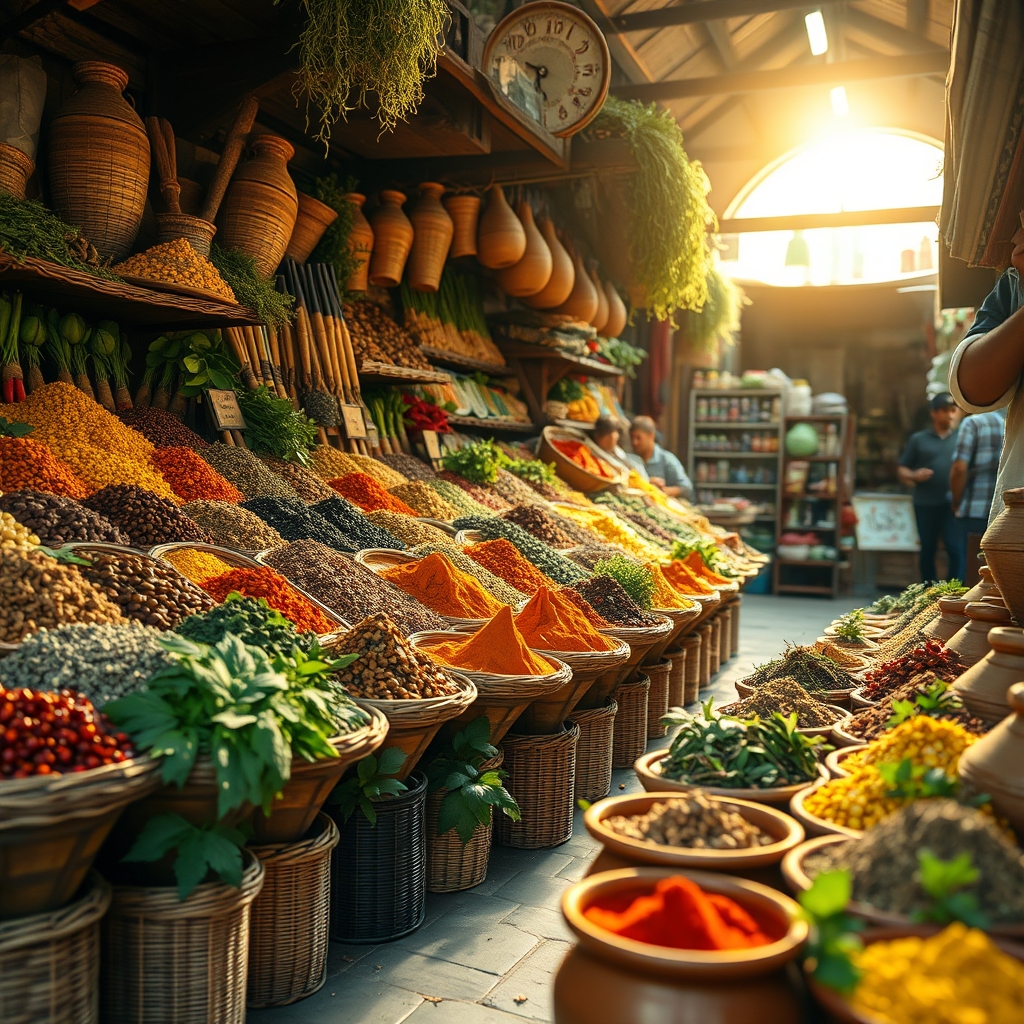
The spices in berbere map Ethiopia's position as a crossroads. The chilies came from Portuguese traders who arrived in the 16th century. The cardamom and ginger reflect ancient trade with South Asia and the Arab world. The fenugreek connects to the broader Horn of Africa. The local additions — rue, bishops weed — are distinctly Ethiopian. Berbere is a spice autobiography: every ingredient marks a relationship with another culture.
What strikes me about berbere is the communal aspect. Ethiopian food is served on a shared platter of injera (sourdough flatbread). You eat with your hands. You tear off bread and scoop up stew together. The sauce isn't just flavor — it's the medium through which people share a meal. As I wrote in food as identity, what we eat together defines us as much as what we eat alone.
What the Sauce Teaches
There's a pattern here that transcends cooking. Every foundational sauce shares three properties:
It's born from constraints. Dashi from an island nation. Fish sauce from the need to preserve a perishable protein. Sofrito from making tough, cheap ingredients taste extraordinary. Scarcity doesn't produce inferior food. It produces ingenious food.
It carries invisible history. Trade routes, conquests, migrations, colonial encounters — all encoded in ingredient lists. A sauce is a compressed archive. When you taste garum in your fish sauce, you're tasting Rome. When you taste cinnamon in your mole, you're tasting the spice trade. Food remembers what documents forget.
It resists standardization. Every family, every region, every cook has their version. The variation isn't a bug — it's the point. A sauce that's identical everywhere is an industrial product. A sauce that shifts from kitchen to kitchen is a living culture. The language of food is always a dialect, never a standard.
Next time you eat something transcendent — something that tastes like more than just ingredients — ask what's underneath. What's the base? What's the mother sauce? Because somewhere in that flavor is a story that stretches back centuries. A story about people who figured out how to turn what they had into something that would outlast them.
That's what a sauce is, when you really think about it. Not a condiment. A legacy.