The Lost City of Petra's Hidden History
I've always been fascinated by the ancient city of Petra, hidden deep within the desert canyons of Jordan. As I delved deeper into its history, I discovered that there's more to Petra than its intricate rock-cut architecture and stunning natural surroundings. The city has a rich and complex past, shaped by the various cultures that once called it home. From the Nabataeans to the Romans, each civilization left its mark on Petra, and it's this diverse heritage that makes the city so captivating.
One of the most intriguing aspects of Petra's history is its origins. The city was founded by the Nabataeans, a group of Arabs who settled in the area over 2,000 years ago. They were skilled traders and engineers, and their expertise is evident in the sophisticated water conduit system and monumental structures that they built. But the Nabataeans were more than just skilled craftsmen – they were also fiercely independent and resistant to outside influence. This is reflected in the unique blend of cultures that is evident in Petra's architecture, which combines elements of Greek, Roman, and Middle Eastern styles.
The Nabataean Legacy
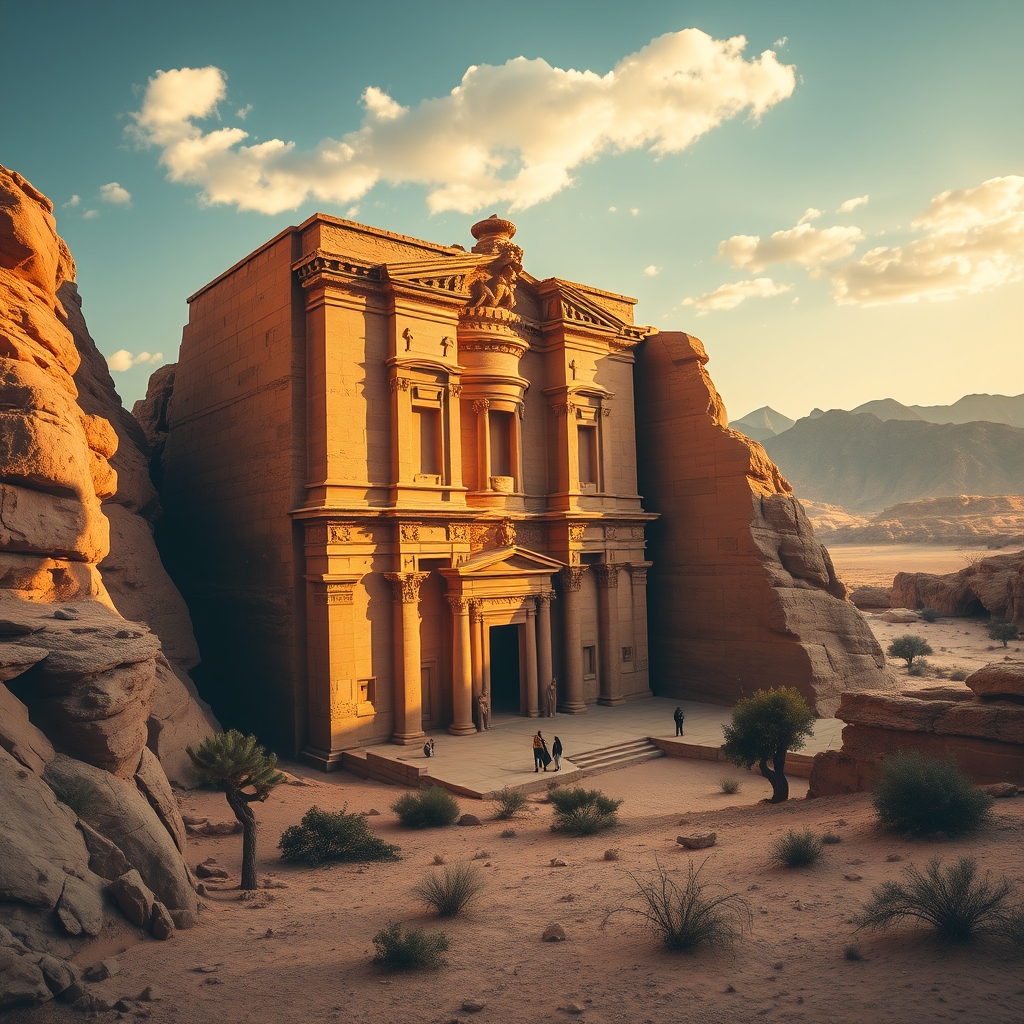
As I explored Petra, I was struck by the sheer scale and grandeur of the city's monuments. The Treasury, or Al-Khazneh, is perhaps the most iconic of these, with its intricately carved facade and towering columns. But it's not just the architecture that's impressive – it's also the history and symbolism behind it. The Treasury is believed to have been built as a tomb for one of the Nabataean kings, and its design reflects the cultural and religious practices of the time. The intricate carvings and statues that adorn the facade are a testament to the advanced artistic and technical skills of the Nabataeans, and demonstrate their deep understanding of the natural world and the spiritual forces that shaped it.
Despite the many wonders of Petra, the city remains somewhat of an enigma. Much of its history is still shrouded in mystery, and archaeologists and historians continue to debate the significance of various artifacts and structures. One of the most enduring mysteries is the purpose of the Monastery, or Al-Deir, which is situated atop a mountain overlooking the city. This imposing structure is believed to have been built as a temple or shrine, but its exact function and significance are still unknown. As I stood before the Monastery, I couldn't help but feel a sense of awe and wonder at the secrets that it still holds.
Uncovering the Secrets of Petra
As our understanding of Petra's history and culture continues to evolve, new discoveries are being made that shed light on the city's hidden past. Recent excavations have uncovered evidence of a previously unknown Nabataean settlement, which is providing valuable insights into the daily lives of the people who once lived in Petra. Additionally, advances in technology are allowing researchers to study the city's architecture and artifacts in greater detail than ever before, revealing new information about the materials and techniques used in their construction. As we continue to uncover the secrets of Petra, we are gaining a deeper appreciation for the complexity and richness of the city's history, and the many cultures that have contributed to its unique heritage.
For anyone interested in history, culture, or simply exploring one of the world's most fascinating destinations, Petra is a must-visit destination. Whether you're wandering through the narrow canyon known as the Siq, marveling at the grandeur of the Treasury, or simply taking in the stunning natural beauty of the surrounding landscape, Petra is a place that will leave you in awe. As I reflect on my own experiences in Petra, I am reminded of the power of history and culture to inspire and educate us, and of the importance of preserving our cultural heritage for future generations.
Petra's Enduring Legacy
Today, Petra is recognized as a UNESCO World Heritage site, and is considered one of the most important cultural and historical destinations in the world. As such, it is a powerful symbol of the enduring legacy of the Nabataeans and the other cultures that have shaped its history. Whether you're an historian, an archaeologist, or simply someone who appreciates the beauty and significance of this ancient city, Petra is a place that will continue to captivate and inspire you. As we look to the future, it's clear that Petra will remain an important part of our shared cultural heritage, a reminder of the power of human creativity and ingenuity to shape the world around us.
I explored a related angle in Uncovering the Secrets of Samurai Honor if you want to keep pulling this thread.
In the end, Petra's hidden history is a reminder that there's always more to discover, more to explore, and more to learn. As we continue to uncover the secrets of this ancient city, we are gaining a deeper understanding of the complex and fascinating history that has shaped it. And it's this history, with all its mysteries and wonders, that makes Petra such a compelling and unforgettable destination. Whether you're a seasoned traveler or just starting to plan your next adventure, Petra is a place that is sure to leave you with a lasting sense of wonder and awe.