The Global History of Bread: 14,000 Years at the Table
This post contains affiliate links. If you purchase through them, I may earn a small commission at no extra cost to you.
In 2018, archaeologists excavating a site in northeastern Jordan found charred fragments of flatbread. The analysis dated them to approximately 14,400 years ago — nearly 4,000 years before the dawn of agriculture.
Humans were making bread before they were farming grain. They were grinding wild cereals, mixing the flour with water, and baking it on hot stones — for reasons that must have seemed worth the extraordinary effort.
That discovery reframes everything we thought we knew about bread's origins. And it opens a question that 14,000 years hasn't answered: what is it about bread that makes it universal?
Before Agriculture: The Natufian Bakers
The Natufian culture of the Levant (modern-day Israel, Palestine, Jordan, Syria, and Lebanon) was a semi-sedentary hunter-gatherer society. They built permanent structures, buried their dead with grave goods, and — apparently — baked flatbreads from wild einkorn wheat, wild barley, and oat-like plants.
The labor involved was staggering. Wild grain must be harvested by hand, stone by stone. It must be threshed to separate grain from chaff. Then ground between rocks — a process that could take hours to produce a small quantity of coarse flour. Then mixed, shaped, and baked.
Why bother? Because cooked starch is dramatically more digestible than raw grain. A handful of cooked wheat flour delivers more usable calories than twice as much raw grain. Bread was technology — a caloric upgrade that may have enabled the population density required for settled civilization to emerge. As we explored in why food is never just food, what we eat is always also about how we organize ourselves.
Leavening: The Accidental Revolution
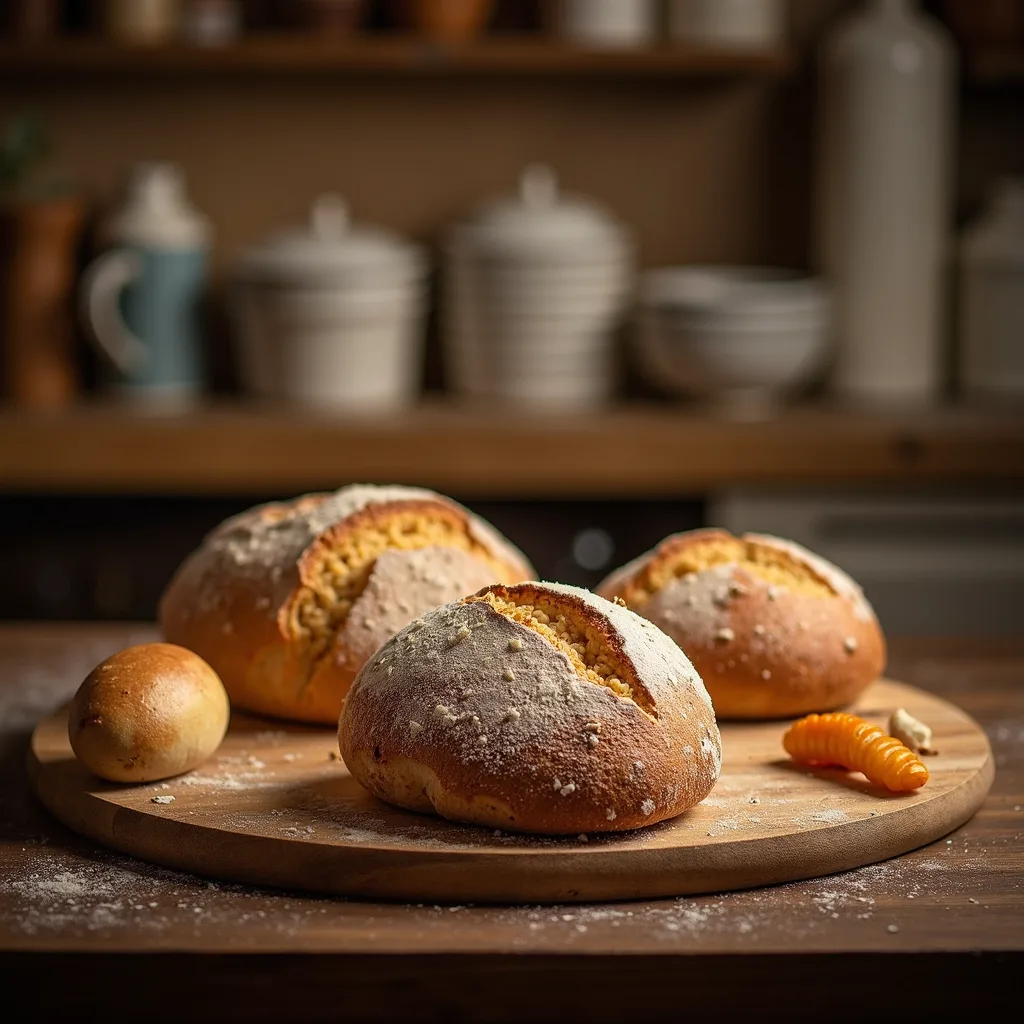
At some point — no one knows exactly when or where — someone left their dough out too long. Wild yeast and bacteria from the air colonized the mixture. When baked, the bread rose. It was lighter, chewier, more flavorful than flatbread. And it kept longer.
Leavening is biotechnology. The Egyptians refined it into something approaching industrial production. By 1350 BCE, the royal bakeries at Tell el-Amarna were producing dozens of bread varieties — some sweet, some spiced, some shaped into ritual forms. Egyptian bread has been found in tombs, placed alongside the dead as sustenance for the afterlife. It's the same logic that put food in Mesopotamian graves — bread was survival, and survival mattered even beyond death.
The Egyptians also discovered beer as a byproduct of bread fermentation. The two technologies — bread and brewing — are siblings, born from the same microbial partnership. Both require grain, water, and wild yeast. Both transformed human nutrition. Both drove the demand for cultivated grain that made large-scale agriculture economically necessary.
Grain as Currency, Power, and Control
Wherever wheat and bread went, political power followed. Rome's emperors understood this with the precision of economists: control the grain supply, control the population. The annona — the state grain distribution — fed hundreds of thousands of Romans who had neither the land nor the income to grow their own wheat. The phrase "bread and circuses" (panem et circenses) wasn't cynical commentary — it was governance theory.
The same logic appears across civilizations. The Aztec state controlled maize distribution. The British Empire's Corn Laws manipulated wheat prices for political ends. The Soviet Union's forced collectivization of grain was partly about centralizing food power. Grain politics is the oldest form of food politics — and it remains active. The 2010–2012 Arab Spring was partly triggered by global wheat price spikes. Bread has always been political.
The Diversity That Globalization Flattened
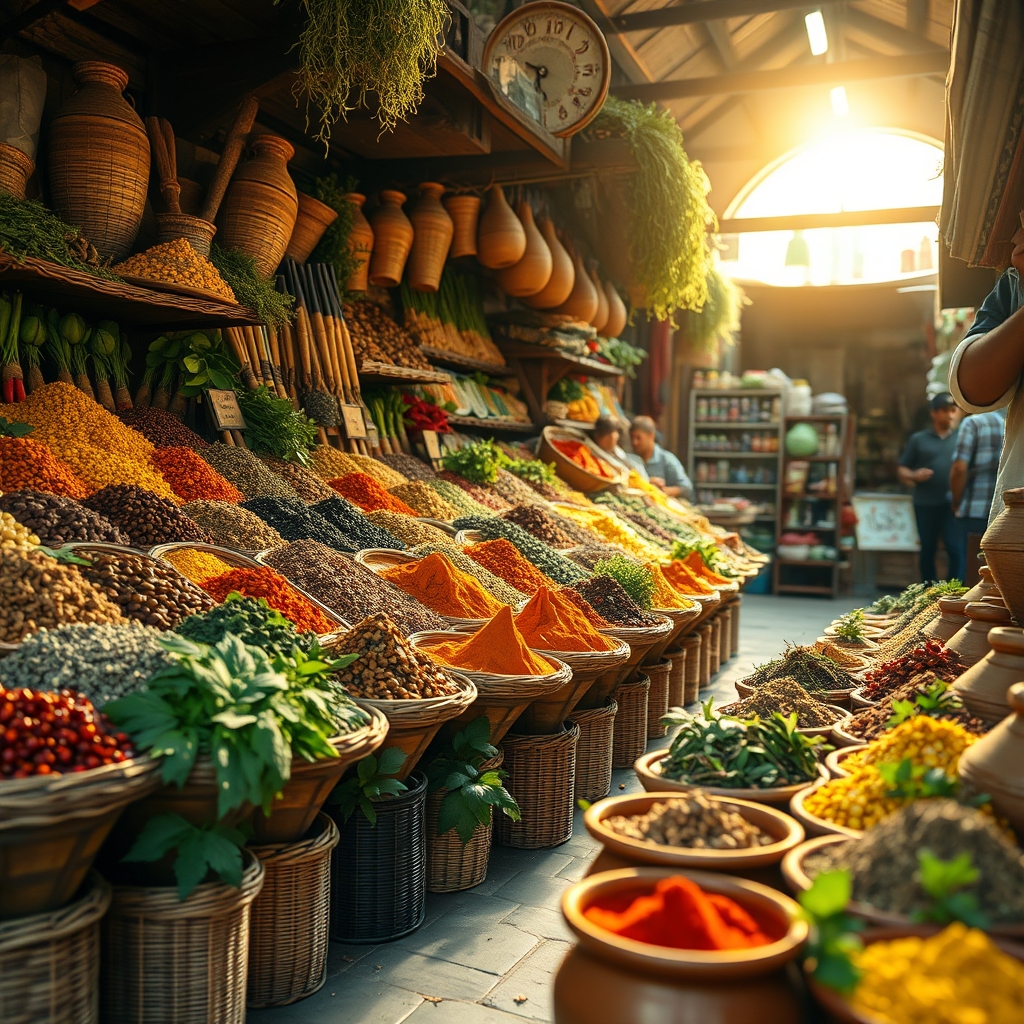
Before industrial milling, every region had its own bread culture built from local grains, local fermentation traditions, and local cooking methods. Ethiopian injera — a spongy sourdough flatbread made from teff, fermented for days, used as both plate and utensil. Indian roti, baked on a tawa from whole wheat flour, freshly made at each meal. Scandinavian knäckebröd, crisp rye flatbread that could survive months of winter storage. Mexican tortillas from masa nixtamal — corn treated with lime to unlock nutritional value.
These aren't variations on a single theme. They're distinct technologies evolved over centuries for specific climates, crops, and cultures. As we explored in how food memory shapes identity, regional bread traditions encode cultural memory as much as recipes. The particular sourness of San Francisco sourdough, the open crumb of Parisian baguette, the dense sweetness of Hawaiian poi bread — each is a signature of place and history.
Industrial milling changed this. Roller mills introduced in the 1870s could strip the bran and germ from wheat, producing fine white flour with a long shelf life — but stripped of the fiber, vitamins, and fermentation complexity that made whole grain bread nutritious. White bread became a status symbol (wealthy people could afford processed flour), then a mass product, then a nutritional problem. The sourdough revival of the past decade is partly a rejection of this flattening — a return to fermentation, whole grains, and the complexity that industrial bread sacrificed for shelf life.
The Loaf as Mirror
The bread you eat is a mirror of your civilization's values and constraints. Hunter-gatherers made flatbreads with wild grain because they moved and couldn't tend fields. Egyptians built leavened bread culture alongside state grain management. Romans used bread as a tool of imperial governance. Industrial societies automated it into uniformity. And now a generation that has never baked bread is learning to ferment sourdough starters as an act of reconnection with process, tradition, and time.
What you put on the table is never just food. It's a record of how your society organizes labor, what it values, what it's lost, and what it's trying to recover. Bread has been in that record for 14,000 years — longer than cities, longer than writing, longer than anything we call civilization.
That Natufian baker grinding wild wheat on a stone in the Jordan Valley was doing something we still recognize. The flour, the water, the fire: the recipe hasn't changed as much as we think.