Roman Roads Weren't Built for Conquest—They Were Built for Trade
This post contains affiliate links. If you purchase through them, I may earn a small commission at no extra cost to you.
The short answer: Roman roads were primarily built to facilitate trade and economic integration across the empire, not military conquest—and their design prioritized merchant access and commercial efficiency so effectively that they remained economically viable long after the empire collapsed.
Roman Roads Weren't Built for Conquest—They Were Built for Trade
What was the real purpose of Roman roads?
Roman roads were designed as economic arteries connecting far-flung provinces into a unified commercial network, enabling unprecedented trade volume and monetary integration across three continents. While military movement certainly benefited from these highways, the economic logic behind their construction was far more sophisticated. The Romans understood that controlling an empire meant more than controlling armies—it meant controlling commerce, standardizing weights and measures, and creating predictable routes for merchants.
The Roman road system, known as the via publica, wasn't a military invention. It was born from economic necessity. When Rome absorbed Egypt, Asia Minor, North Africa, and Britain, it faced a fundamental problem: how do you make these disparate regions economically cohesive? The answer was infrastructure. By the height of the empire, Rome had constructed approximately 250,000 miles of roads—a feat of engineering and economic planning that wouldn't be matched until the interstate highway system of the 20th century.
Consider the via Appia, constructed in 312 BCE. Senators didn't authorize its building to prepare for military conquest. They authorized it because Rome needed to connect to the port city of Brindisi, one of the empire's key trading hubs. The road reduced travel time from weeks to days, making the transport of goods—olive oil, wine, grain, marble—economically viable at scale. A merchant traveling from Rome to the provinces could now count on predictable journey times, reducing risk and insurance costs for their shipments.
How did Roman roads create an integrated economy?
Roman roads standardized transportation costs, reduced trade friction, and created a single market across three continents by making long-distance commerce faster, safer, and more profitable than ever before. This is where the Roman achievement becomes truly extraordinary from an economic perspective.
Before the roads, commerce in the ancient world was fragmented. A merchant in Gaul might trade only with immediate neighbors because the risks of long-distance travel were prohibitive. Bandits, poor roads, and unpredictable conditions meant that goods lost value over distance. Roman roads changed this calculation entirely.
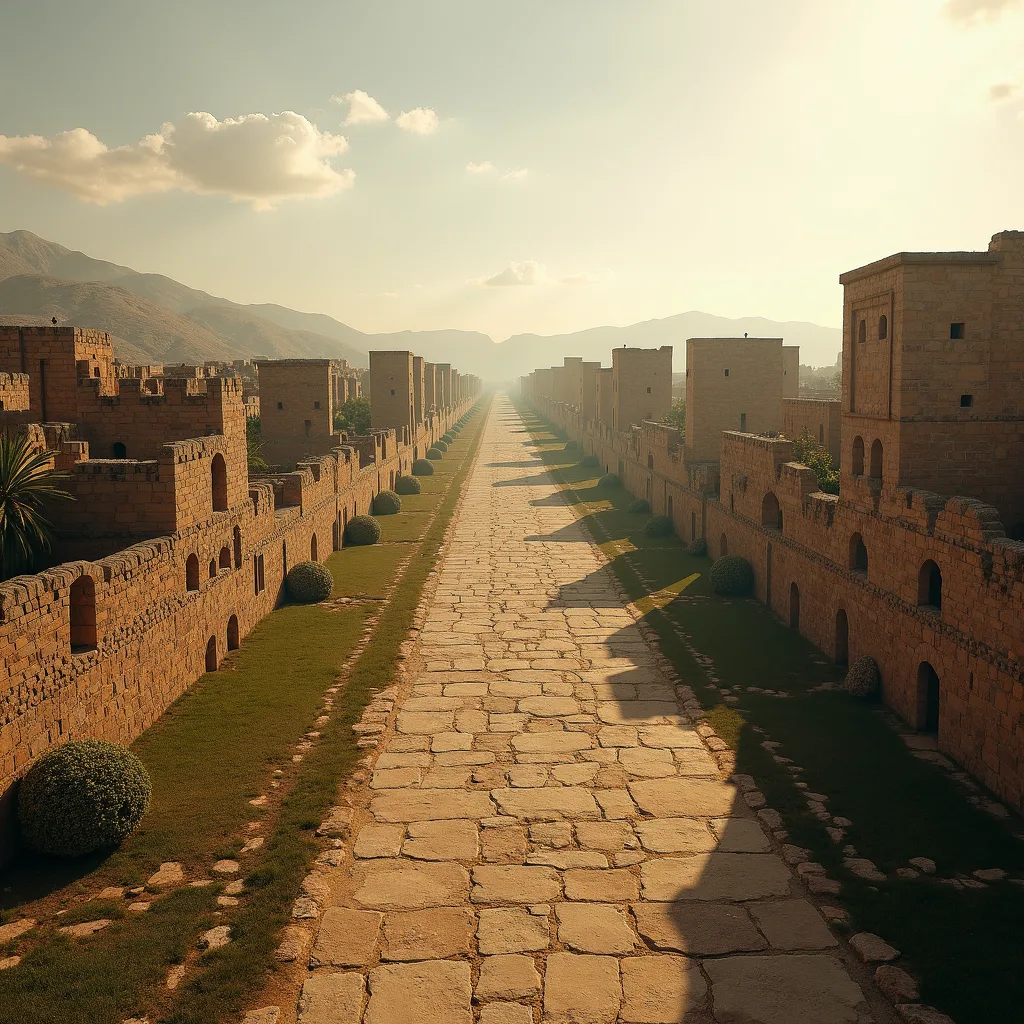
The roads weren't just convenient—they were standardized. Roman engineers built them to consistent specifications: approximately 12-15 feet wide, with cambered surfaces for drainage, multiple foundation layers, and regularly spaced rest stations called mansiones. This standardization meant that merchants knew their carts would fit, their animals could be refreshed at predictable intervals, and they could maintain schedules. For the first time in human history, trade became a matter of logistics rather than luck.
The economic impact was dramatic. Archaeological evidence shows that pottery, wine, and other goods traveled in volumes that would have been impossible before the roads. A single shipwreck off the Italian coast from the 2nd century CE yielded thousands of wine amphorae—evidence of mass production and long-distance trade at unprecedented scale. Price harmonization across provinces suggests that goods were flowing freely enough to equalize regional price differences, the hallmark of an integrated market.
The roads also enabled the standardization of currency. When merchants could reliably travel between provinces, the empire's monetary system became practical to enforce. The denarius circulated from Britain to Mesopotamia not because Rome conquered these places, but because traders needed a common medium of exchange for commerce on Roman roads. This is not coincidental—monetary integration and transportation integration are inseparable.
How did Roman roads outlast the empire itself?
Roman roads persisted long after Rome fell because they remained economically essential infrastructure that medieval societies, kingdoms, and eventually modern nations continued to maintain and use for the same commercial purposes Rome had designed them for.
Here's the remarkable truth: the fall of Rome in 476 CE did not mean the end of Roman roads. Many of them are still in use today. Parts of the via Appia still carry traffic outside Rome. The road from Cologne to the Rhine, built by Roman legions, became the foundation for medieval trade routes and eventually modern German highways. Why? Because Rome hadn't built these roads to last only as long as the empire—it had built them to serve commerce, and commerce didn't end when emperors did.
In the early medieval period, when Rome's political authority fragmented, the roads initially deteriorated. Maintenance required central authority and resources that no longer existed. However, the very merchants and kingdoms that Rome had unified through trade maintained incentive to keep key routes passable. Medieval lords understood that permitting trade on Roman roads generated tolls and taxes. The infrastructure was too valuable to abandon entirely.
By the 10th and 11th centuries, the most important Roman roads had been restored and incorporated into the emerging medieval trade networks. The Hanseatic League, the great merchant confederation of northern Europe, built its entire commercial network atop Roman foundations. When you trace the routes of the medieval fairs of Champagne—which became the economic engine of early European trade—you're often following Roman roads.
This is the crucial distinction: military infrastructure decays when the military that built it dissolves. Economic infrastructure persists because it continues to serve the function for which it was designed. The roads outlasted Rome because they were never primarily about Rome's power—they were about the universal human impulse to trade.
Why is this different from how we usually understand Rome?
Traditional military history emphasizes Roman roads as tools of conquest and control, but economic history reveals they were the world's first continental free-trade infrastructure, built to maximize commerce rather than minimize rebellion.
The prevailing narrative—the one you'll find in most textbooks—is that Roman roads enabled Rome's military superiority. Legions could march rapidly across the empire. Rebellions could be crushed quickly. This is technically true, but it's like saying highways were built to enable police chases. It's the secondary function, not the primary purpose.
The roads were built by commercial energy, not military necessity. The Senate approved road construction based on economic proposals. Merchants and cities lobbied for connections. The empire that invested in roads most heavily was the empire in its economic peak—the 2nd century CE under the Antonines, when trade volume was maximum. As the empire's economy declined in the 3rd century, road construction ceased. If roads were primarily military tools, we'd expect the opposite pattern: more road-building as the military struggled to control a fragmenting empire.
Consider how this reframes our understanding of Rome itself. Rome wasn't primarily a military empire that happened to engage in trade. Rome was an economic empire that maintained military authority to protect trade networks. This might seem like philosophical hair-splitting, but it changes everything about how we evaluate Rome's legacy. Rome's greatest achievement wasn't the legions—it was the creation of the first truly integrated continental economy. The Silk Road later replicated this model on an even grander scale, but Rome did it first.
Key Definitions
- Via Publica
- The Latin term for public roads built and maintained by the Roman state, typically referring to major highways connecting provincial capitals and commercial centers.
- Mansiones
- Regularly spaced rest stations along Roman roads where merchants, officials, and travelers could refresh animals, secure supplies, and rest overnight.
- Monetary Integration
- The process by which a single currency becomes accepted and used across multiple regions, enabling commerce without constant currency exchange.
- Price Harmonization
- The economic principle that in an integrated market with low transportation costs, prices for the same goods tend to equalize across regions.
- Via Appia
- The Appian Way, one of Rome's most important roads, constructed in 312 BCE to connect Rome to the port city of Brindisi in southern Italy.
What does this tell us about infrastructure and empire?
The Roman road system offers a lesson that modern policymakers still haven't fully internalized: infrastructure investment is the highest form of economic power. Military conquest is temporary; economic integration is durable. When Rome invested in roads, it wasn't securing its borders—it was creating a constituency of merchants with an interest in Roman stability. Every trader whose business depended on the roads was a stakeholder in Rome's survival.
This is why the roads outlasted the empire. Rome's military rivals and successors might despise Rome's political authority, but they couldn't afford to destroy its economic infrastructure. The roads had become too valuable. This is the ultimate test of Rome's genius: they built something so economically essential that even their enemies had to maintain it.
If you want to understand how empires actually consolidate power, look to infrastructure, not armies. The Inca later understood this principle as well, building an even more sophisticated road network. And if you want to understand why Rome matters historically, understand this: Rome proved that you could bind together an empire spanning three continents not through coercion, but through the mundane logistics of making trade work.
The Bottom Line
Roman roads were built to facilitate trade and create an integrated continental economy, not primarily to enable military conquest—and their commercial value was so great that they remained essential infrastructure long after Rome's political authority disappeared. The roads succeeded not because they served military need, but because they served economic interest, a principle that explains why Roman road systems remain in use more than 1,500 years after the empire fell. This reframes Rome's entire legacy: not as a military power that happened to trade, but as an economic power that maintained military authority to protect trade networks.
Frequently Asked Questions
- Did Roman roads have military purposes?
- Yes, Roman roads certainly facilitated military movement and troop deployment, which was a secondary but significant benefit. However, the primary economic driver of road construction and maintenance was commerce. Military advantage was valuable, but predictable merchant access to markets was economically essential. The pattern of road construction—concentrated in economically productive provinces and declining as the empire's economy weakened—demonstrates that economic logic, not military strategy, drove the road system's development.
- How many Roman roads were there?
- The Roman Empire constructed approximately 250,000 miles of roads at its peak, with major routes connecting all provincial capitals and key trading centers. The most famous include the via Appia (Rome to Brindisi), the via Egnatia (connecting the Adriatic to the Black Sea), and the via Augusta (connecting northern Italy to Spain). The precise total is difficult to determine because the definition of what counted as an official "Roman road" versus local roads built to Roman standards varied across regions and time periods.
- What happened to Roman roads after Rome fell?
- Many Roman roads fell into disrepair during the early medieval period when centralized maintenance systems collapsed. However, the most economically important routes were gradually restored by medieval kingdoms and merchant associations because they remained valuable for trade. Many major European highways today follow routes originally laid out by Rome, including sections of modern motorways in Italy, France, Germany, and Britain. The roads' commercial utility ensured that essential sections were preserved even as Rome's political authority vanished, making them the longest-lasting physical legacy of Roman civilization.