How Ottoman Coffee Houses Became the First Social Networks—And Why They Terrified Governments
The short answer: Ottoman coffee houses became the first social networks by creating neutral public spaces where merchants, scholars, and ordinary people gathered to exchange news, debate ideas, and organize—so much so that sultans banned them, calling them "schools of sedition" because they threatened centralized control of information and power.
What made Ottoman coffee houses the first social networks?
Coffee houses replicated every function of modern social networks: they were public platforms for information sharing, places where ideas went viral, and spaces where strangers could connect across social hierarchies.
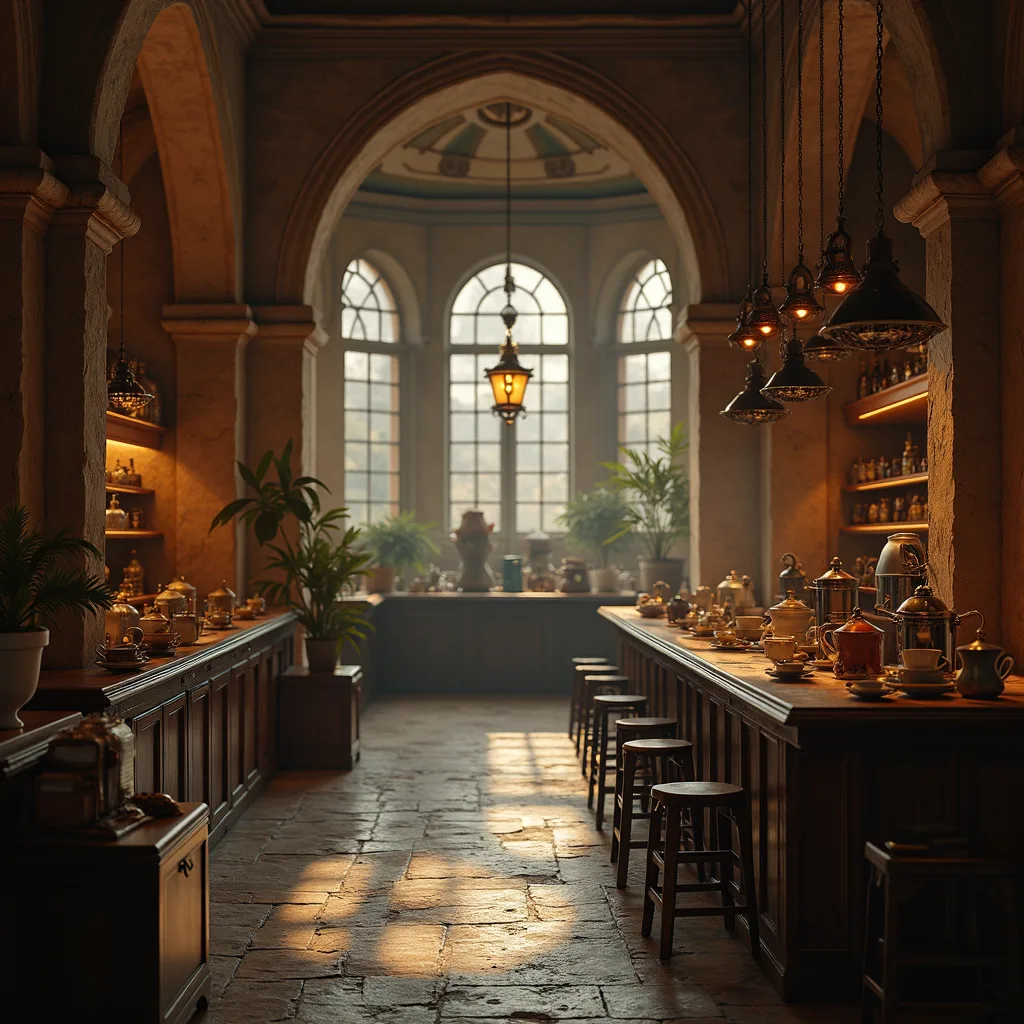
When coffee arrived in the Ottoman Empire in the 15th century, it didn't just become a beverage—it became an infrastructure for human connection. Unlike taverns that served alcohol and excluded women, or mosques that were primarily religious spaces, coffee houses operated as genuinely open forums. A merchant could sit next to a scholar, a soldier could debate a poet, and a slave could listen to the same conversation as a nobleman—all over a cup of coffee.
These weren't quiet spaces. Ottoman coffee houses became known as mektep-i irfan ("schools of knowledge") where patrons engaged in intense discussion. News traveled through these spaces with remarkable speed. A ship arriving in port would be discussed in every coffee house by evening. Political rumors, commercial opportunities, religious controversies, and gossip all flowed through the coffee house network like posts on a social feed.
Historians estimate that by the 17th century, Istanbul alone had hundreds of coffee houses. They weren't isolated venues—they were connected by the same people who moved between them, creating what we'd now recognize as a distributed information network. A story shared in one coffee house would be carried by customers to another, then another, spreading across the city in hours and across the empire in weeks.
Why did Ottoman governments see coffee houses as dangerous?
Governments feared coffee houses because they created spaces beyond official control where people could organize resistance, spread forbidden ideas, and undermine state monopolies on information and authority.
For centuries, Ottoman sultans had controlled information through official channels: royal decrees, religious proclamations, and court announcements. Coffee houses destroyed this monopoly. A sultan could issue an edict, but within hours, citizens would be debating its merits in a hundred different coffee houses, interpreting it, critiquing it, and potentially organizing against it.
The danger became real during moments of social tension. In the 1650s, during a period of political instability called the "Sultanate of Women," coffee houses became centers of sedition. Dissidents used them to organize. Radical preachers used them to spread anti-government theology. The elite clergy, the Ulama, felt their monopoly on religious interpretation slipping away as common people debated theology in coffee houses.
In 1633, the Ottoman government issued a fatwa (religious ruling) declaring coffee forbidden because it was mentioned in the Quran as something "that causes harm to the body"—a flimsy religious justification that everyone recognized as a power grab. Governments don't ban things because they cause minor physical harm; they ban them when those things threaten control.
The bans failed spectacularly. People continued drinking coffee in secret. Some coffee house owners moved operations underground or into private homes. The demand only increased. By the 18th century, the government gave up trying to ban coffee itself and instead focused on regulating and licensing coffee houses, trying to turn them into monitored spaces where informants could report seditious talk.
This is precisely how modern governments treat social media platforms: they can't ban them entirely (the demand is too great), but they try to regulate them, censor content, and plant informants. The parallel is uncanny.
How did coffee houses actually spread revolutionary ideas?
Coffee houses spread ideas through casual conversation that reached ordinary people excluded from elite institutions, allowing concepts to be debated, refined, and coordinated into actual movements.
One of the most documented examples involves the Tulip Period (1718-1730), an era of Ottoman cultural flourishing that also saw increased European cultural influence entering the empire through coffee house discussions. Western ideas about architecture, fashion, and even governance circulated first in coffee houses before they influenced policy or sparked backlash.
More dramatically, coffee houses became organizing centers for janissaries (elite Ottoman soldiers) who resented reforms. These elite military units used coffee houses as meeting places to coordinate rebellion against sultans they deemed weak. Several Ottoman sultans were actually deposed as a result of conspiracies hatched in coffee houses—making them literally revolutionary spaces.
The power of coffee houses lay in their democratization of information. In earlier periods, knowledge was locked in libraries and courts. The Muslim Scholars Who Actually Built Modern Science had long preserved knowledge in Arabic texts, but that knowledge remained elite. Coffee houses made it conversational and accessible.
A poem about social justice could be recited in a coffee house and immediately debated by dozens of people. A merchant returning from Europe could describe new political systems. A scholar could argue against traditional interpretations of Islamic law. None of this could happen in a mosque or government building, but all of it happened constantly in coffee houses. Ideas that would have taken decades to spread through official channels moved through the coffee house network in weeks.
Key Definitions
- Coffee House (Kahvehane)
- A public establishment serving coffee and other non-alcoholic beverages where patrons gathered to socialize, discuss current events, play games, and exchange information. Unlike taverns, they remained open to all social classes and both genders.
- Mektep-i Irfan
- Turkish phrase meaning "schools of knowledge," the popular name for Ottoman coffee houses that reflected their function as informal centers of learning and debate.
- Fatwa
- A religious ruling or edict issued by Islamic legal scholars (Muftis) interpreting Islamic law; used by Ottoman authorities as justification for regulating or attempting to ban coffee.
- Ulama
- The Islamic scholarly and religious elite who traditionally held monopolies on interpreting religious law and doctrine; felt threatened by coffee house discussions that democratized theological debate.
- Janissaries
- Elite Ottoman military units who were pivotal in Ottoman politics and frequently used coffee houses as organizing centers for political action, including deposing sultans.
How did coffee houses work as information networks without modern technology?
Coffee houses operated as information networks through human circulation—the same people visited multiple houses daily, carrying stories, rumors, and news that spread through word-of-mouth faster than any official communication system.
Imagine a merchant who visits three coffee houses each morning. At the first, he hears news about a ship arriving from Egypt. At the second, he shares that news while hearing gossip about palace politics. At the third, he learns about a new tax policy. By afternoon, he visits a coffee house in a different neighborhood and spreads all three pieces of information. By evening, those pieces have spread to a dozen more locations through dozens more people.
Ottoman historians recorded that news could traverse from Istanbul to cities 400 miles away in roughly a week—faster than official postal systems. This wasn't because of any technological innovation; it was because the coffee house network created redundant pathways for information. If one person didn't carry a story to another neighborhood, three others probably would.
The coffee house network was also remarkably resistant to censorship. Because conversations were informal and distributed across hundreds of independent establishments, governments couldn't simply shut down information flow. When they tried to ban coffee houses entirely, the network just moved underground or fragmented into smaller groups. This is precisely why modern governments have such difficulty controlling social media—the network structure is fundamentally decentralized.
Coffee houses also functioned as verification systems. If a rumor spread through three different coffee houses from different sources, it gained credibility. This wasn't formal fact-checking, but it was a crowd-sourced credibility mechanism. Outrageous lies didn't spread as widely because they got challenged in coffee house debates. This was better than we might expect from a pre-literate information network.
What can modern business and society learn from Ottoman coffee houses?
Ottoman coffee houses demonstrate that the desire to gather, share information, and build community is fundamental to human nature—and that attempts to control these spaces typically fail and often backfire.
For business leaders, the lesson is simple: communities and networks will form around your product if you provide the right environment. The coffee house wasn't the innovation—coffee was the innovation. The genius was recognizing that people would create social value around that product. Modern companies that thrive (Apple, Harley-Davidson, Tesla) do so partly because they've inadvertently created coffee house-like communities where users gather, exchange ideas, and feel part of something larger.
For governments and institutions, the lesson is more uncomfortable: trying to control information networks through prohibition doesn't work. The Ottoman sultans learned this the hard way. Modern governments are learning it again with social media. The impulse to regulate or ban communication platforms is natural for institutions that held power through information monopolies, but it consistently fails because the underlying demand is too strong.
Historically, the most effective governments weren't those that banned coffee houses but those that learned to live with them, monitor them selectively, and sometimes co-opt them. The Ottomans eventually gave up on prohibition and instead licensed coffee houses, which gave them some leverage while acknowledging reality. This is closer to how modern democracies should approach social media regulation—not through bans but through frameworks that acknowledge the technology's permanence while setting reasonable boundaries.
There's also a deeper lesson about the relationship between information, power, and society. How Ancient Empires Lost Wars They Were Winning: The Communication Breakdown That Cost Civilizations explores how communication failures destroy empires. Ottoman coffee houses represent the opposite case: empires that tried to suppress communication networks weakened themselves. Successful institutions are those that remain connected to information flowing through their societies, even when that information is critical.
The Bottom Line
Ottoman coffee houses were the first social networks because they created public spaces where diverse people could exchange information, debate ideas, and organize—functions that terrified governments because they undermined centralized control. Sultans who tried to ban coffee houses learned an enduring lesson: you cannot permanently suppress communication networks that serve deep human needs. The parallels to modern social media are striking, and the historical evidence suggests that attempts to control these platforms through regulation or prohibition will ultimately fail, while institutions that learn to coexist with them will prove more resilient.
Frequently Asked Questions
- When did Ottoman coffee houses first appear?
- Coffee houses began appearing in the Ottoman Empire in the 15th century after coffee arrived from Yemen and the Arabian Peninsula. By the 16th century, they had become established social institutions in major cities, with Istanbul developing hundreds of them by the 17th century.
- Why did the Ottoman government ban coffee if it was so popular?
- The government didn't ban coffee because of health concerns (the stated reason), but because coffee houses had become centers of political organization and idea-sharing that threatened state control. The ban was issued in 1633 but proved unenforceable because demand was too strong and people simply consumed coffee underground or in private settings.
- How do Ottoman coffee houses compare to modern social media platforms?
- Both function as public forums for information exchange, both allow ordinary people to debate ideas previously controlled by elites, both spread information faster than official channels, and both have prompted similar government responses (attempts at regulation or prohibition). The main difference is scale and speed—social media reaches millions instantly, while coffee houses reached thousands over weeks.