How Ancient Rome Built Loyalty Without Social Media—And Why Modern Brands Forgot
This post contains affiliate links. If you purchase through them, I may earn a small commission at no extra cost to you.
The short answer: Rome built loyalty through consistent value delivery, shared community identity, and direct human connection—not manipulation—which modern brands have abandoned in favor of algorithms and viral tactics that erode trust instead of building it.
How Ancient Rome Built Loyalty Without Social Media—And Why Modern Brands Forgot
We live in an age of unprecedented marketing sophistication. Brands have access to behavioral data, algorithmic targeting, influencer networks, and real-time engagement metrics that would astound a marketer from just 20 years ago. Yet loyalty is collapsing. Customer retention rates are at historic lows. People distrust corporate messaging more than ever.
Meanwhile, an empire that lasted over 1,000 years built the most durable loyalty in recorded history without a single advertisement, metric dashboard, or customer relationship management system.
Rome's secret wasn't propaganda. It wasn't even particularly clever. It was something far more powerful—and something modern brands have systematically dismantled in their pursuit of scale and speed.
What actually made Romans loyal to the empire?
Romans were loyal because Rome delivered tangible, visible benefits that improved their lives in concrete ways—and never let them forget who provided those benefits.
Think about what Rome did differently than modern brands. When Rome built an aqueduct, it didn't advertise: "Follow us for hydration tips!" Instead, clean water flowed into your city. Every day. Reliable. Free. And every single person who drank that water, washed their clothes in it, or bathed in it knew exactly who provided it: Rome.
The same applied to roads. The Roman road system and how infrastructure becomes empire is perhaps the most underrated loyalty engine in history. When a merchant could transport goods safely from Britain to Syria in a predictable timeframe, that merchant's prosperity was directly tied to Roman governance. When a soldier could march rapidly to protect a frontier, national security became personal benefit.
This is radically different from modern brand loyalty, which typically requires:
- Emotional manipulation through storytelling
- Parasocial relationships with CEO personalities or brand ambassadors
- Gamification and points systems that trick behavior
- FOMO-driven limited editions and exclusivity theater
- Algorithmic feeds that show you what keeps you clicking, not what serves you
Rome did almost none of this. Rome built loyalty the old-fashioned way: by solving real problems so well that people depended on you, and by making sure you got credit for it.
How did Rome communicate its value without digital marketing?
Rome communicated through visible infrastructure, public spectacles, military protection, and direct administrative presence—every message was backed by undeniable proof of value.
When a Roman legion marched through a province, soldiers weren't there to promote imperial ideology. They were there to enforce order, which meant merchants could trade without constant fear of bandits. When Rome appointed a governor, he wasn't a distant figure—he was physically present, making decisions that affected daily life.
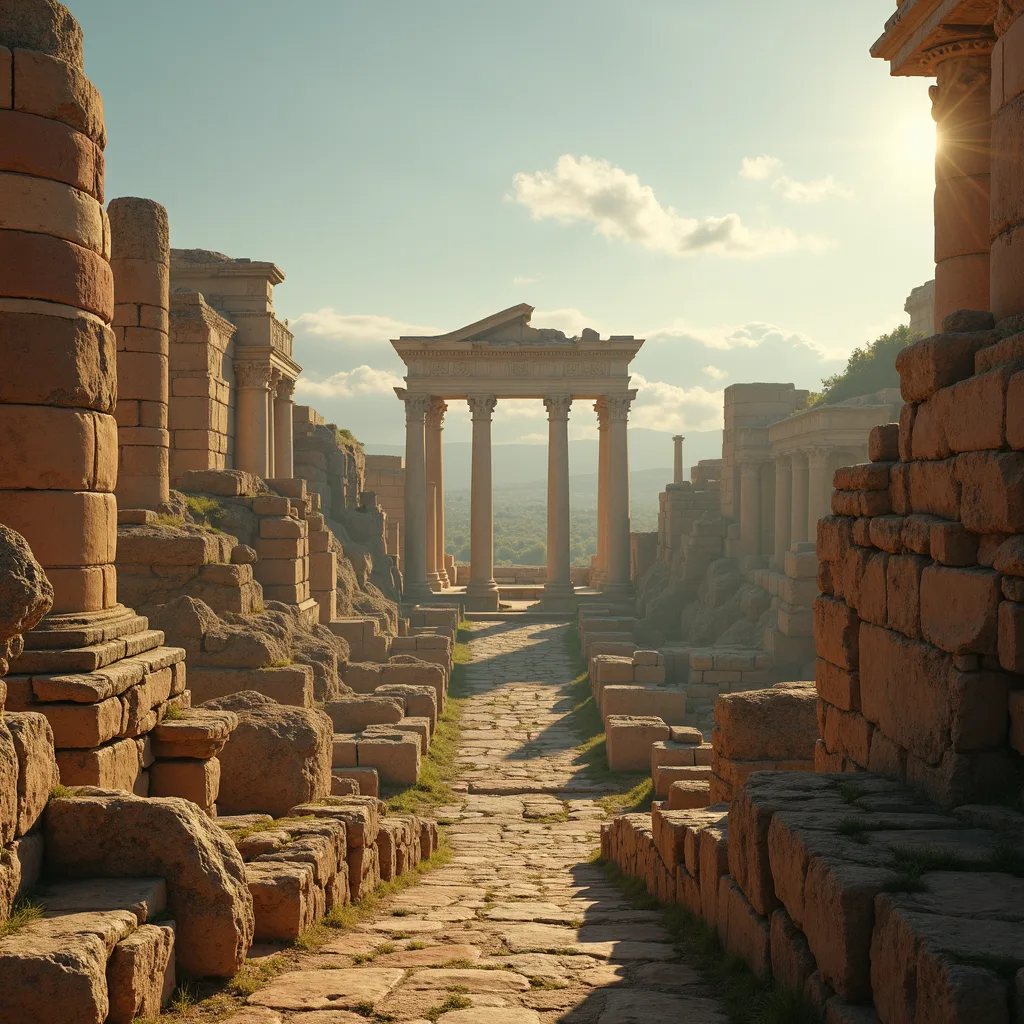
The colosseum, aqueducts, and roads weren't just engineering. They were trust signals. They said: "Rome has resources. Rome has vision. Rome can execute." They were visible from anywhere in the empire, constantly reminding people of Roman capability.
Compare this to modern brand communication. How many times have you seen a company's values statement that contradicts its actual pricing or labor practices? How many sustainability promises appear while the company quietly lobbies against environmental regulation? Rome couldn't do this. When an aqueduct broke, everyone saw it. When roads deteriorated, commerce suffered. Accountability was built into the system.
The public spectacles served a similar function—not as propaganda, but as proof. When Rome hosted games, gladiatorial contests, or chariot races, ordinary people experienced entertainment they couldn't create themselves. This wasn't manipulation; it was genuine value. But it also made the population feel included in something larger. Modern brands chase this feeling by creating "communities," but communities built on transaction and manipulation collapse the moment something cheaper or more convenient appears.
What made Roman loyalty different from modern brand loyalty?
Roman loyalty was based on mutual interest and shared identity—you benefited because the empire benefited, not because a brand successfully exploited your psychology.
Here's the crucial distinction: Rome's citizens were loyal because loyalty served their actual interests. A prosperous empire meant secure trade routes, which meant your business thrived. A strong military meant your borders were safe. Legal systems meant contracts were enforceable. These weren't emotional benefits. They were material reality.
Modern brands try to create loyalty through emotional design, narrative, and belonging. Apple creates an identity ("You're creative, you're different"). Nike creates aspiration ("Just do it"). But these loyalties are fragile because they're not rooted in mutual interest—they're rooted in the brand's ability to manipulate your self-image.
Rome created something different: shared identity based on actual membership in a system. You were Roman because you lived under Roman law, used Roman roads, and benefited from Roman military protection. Loyalty wasn't a feeling you chose—it was a recognition of economic and social reality.
This is what modern business schools teach you to forget. They teach you to create "brand loyalty" as a separate thing from customer satisfaction—as though you can manipulate someone into preferring your product even if a better alternative exists. Rome proved that the most durable loyalty comes when there is no separation: when using the brand is genuinely the best available option, and everyone knows it.
Key Definitions
- Structural Loyalty
- Loyalty built into the infrastructure and systems of daily life, where choosing the loyal option is the obvious rational choice rather than an emotional decision.
- Value Visibility
- The degree to which customers can directly observe and experience the concrete benefits provided by a brand or organization, creating undeniable proof of worth.
- Accountability Architecture
- Systems designed so that failure to deliver value is immediately visible and consequential, making it impossible for a brand to promise value it doesn't deliver.
- Parasocial Loyalty
- Modern form of brand loyalty built on one-sided emotional connection to a brand narrative or personality, often disconnected from actual product quality or value.
Why did modern brands abandon this model?
Modern brands optimized for scale and short-term profit over sustainability, abandoning the infrastructure-first approach that made Rome's loyalty durable.
The shift happened gradually. As markets became global, as competition intensified, and as quarterly earnings became the measure of success, brands realized something: manipulating perception is cheaper than delivering exceptional value at scale.
It's genuinely difficult to make a product so good that it serves every customer's interests better than the alternative. It's far easier to create a brand story that makes people want to be loyal despite mediocre delivery. Social media made this approach scalable. You could reach millions of potential customers with a compelling narrative before they realized the product didn't match the promise.
Rome's approach was unsustainable at the imperial level—or so we think. Actually, Rome's approach was unsustainable for a different reason: it required genuine governance excellence. You can't sustain empire through infrastructure and value delivery if your administration is corrupt or incompetent. But you *can* sustain a corporation through marketing if your shareholders don't care whether you destroy customer trust, as long as this quarter's numbers are strong.
The playbook for modern business became: 1) Acquire customers through narrative and viral marketing, 2) Extract maximum value in minimum time, 3) Move to the next cohort of customers before trust erodes. This is the opposite of Rome's approach, which was: 1) Deliver undeniable value, 2) Make sure everyone knows who provided it, 3) compound loyalty across generations.
If you want to understand how business actually built lasting dominance, explore Sapiens, which traces how human organizations grow, or examine The Silk Roads, which shows how trade networks built on genuine mutual benefit create stability across centuries.
What can modern brands actually learn from Rome?
The actionable insight is simple but demanding: build products and services that are so obviously valuable that marketing becomes unnecessary—then make the value visible and tie it directly to your brand.
This doesn't mean you eliminate marketing. It means you invert the priority. Rome's "marketing" was the aqueduct itself. The message was: "Drink this water." The proof was: "It's clean, reliable, and free."
Modern equivalents already exist, though they're rarer than they should be:
- Tesla's approach to electric vehicles (at its best): Rather than advertising "the future of transportation," they built cars that were legitimately faster, more efficient, and cheaper to operate than alternatives. The product sold itself because it was objectively better.
- Costco's loyalty model: Members pay a fee to access lower prices. There's no emotional manipulation—just a clear economic transaction where membership obviously serves your interest. Loyalty is rational.
- Open-source software communities: Linux, Firefox, and other open-source projects build loyalty by delivering genuine value that proprietary alternatives can't match. Users are loyal because the software is actually better, not because of brand identity.
The constraint is this: building this kind of loyalty requires long-term thinking. It requires investing in value delivery even when you could extract more short-term profit through manipulation. It requires accepting that some customers will never be yours because they genuinely don't need what you're selling.
Rome understood this. Rome didn't try to sell aqueducts to desert nomads who didn't need them. Rome built aqueducts where they created genuine value, made sure everyone knew Rome built them, and let loyalty follow naturally.
The Bottom Line
Rome's 1,000-year dominance wasn't built on propaganda, manipulation, or emotional branding—it was built on delivering such obviously valuable services that loyalty became the rational choice rather than an emotional preference. Modern brands abandoned this approach by prioritizing short-term extraction over long-term value creation, using technology and psychology to manufacture loyalty instead of earning it through undeniable proof of worth. The brands that will dominate the next decade won't be the ones with the most sophisticated marketing—they'll be the ones that remember Rome's lesson: make your product so valuable that the only question people ask is where to buy it, not whether they should trust you.
Frequently Asked Questions
- Did Rome actually have better customer loyalty than modern companies, or is this historical nostalgia?
- Rome's loyalty was measurably more durable—the empire persisted for over 1,000 years despite constant political turnover, while modern brands see customer retention decline within years. However, this wasn't because Romans were more emotionally loyal. It was because Rome's value delivery was literally visible every day (clean water, safe roads, military protection), while modern customers have become accustomed to marketing promises that don't match product reality.
- Can a modern brand realistically compete without social media marketing?
- Yes, but only if the product is genuinely superior to alternatives. Brands like Costco, certain luxury brands with long histories, and some B2B companies have built dominant positions with minimal social media marketing by making their value delivery obvious and letting word-of-mouth drive growth. The trade-off is slower initial growth and the discipline to refuse short-term profit opportunities that undermine long-term value delivery.
- Isn't Rome's approach just another form of manipulation—creating systems of dependency?
- There's a real distinction between creating value that people rationally depend on and creating artificial dependency. If an aqueduct brings clean water to a city that previously had only contaminated wells, dependency on that aqueduct is rational—people are better off. If a social media platform algorithmically manipulates what you see to keep you scrolling, dependency on that platform often leaves you worse off. Rome created the former; modern brands frequently create the latter.