How Ancient Rome Built Infrastructure That Outlasted Empires—And Why Modern Cities Can't
This post contains affiliate links. If you purchase through them, I may earn a small commission at no extra cost to you.
The short answer: Roman infrastructure outlasted empires because engineers prioritized durability over speed, used self-healing concrete (pozzolana), built with redundancy, and invested in continuous maintenance—practices modern cities abandoned for cheaper, faster construction that requires replacement every 20-40 years.
What made Roman roads so durable compared to modern highways?
Roman roads used a multi-layered foundation system that distributed weight evenly and allowed water drainage, while most modern roads rely on asphalt that cracks under thermal stress and requires constant patching.
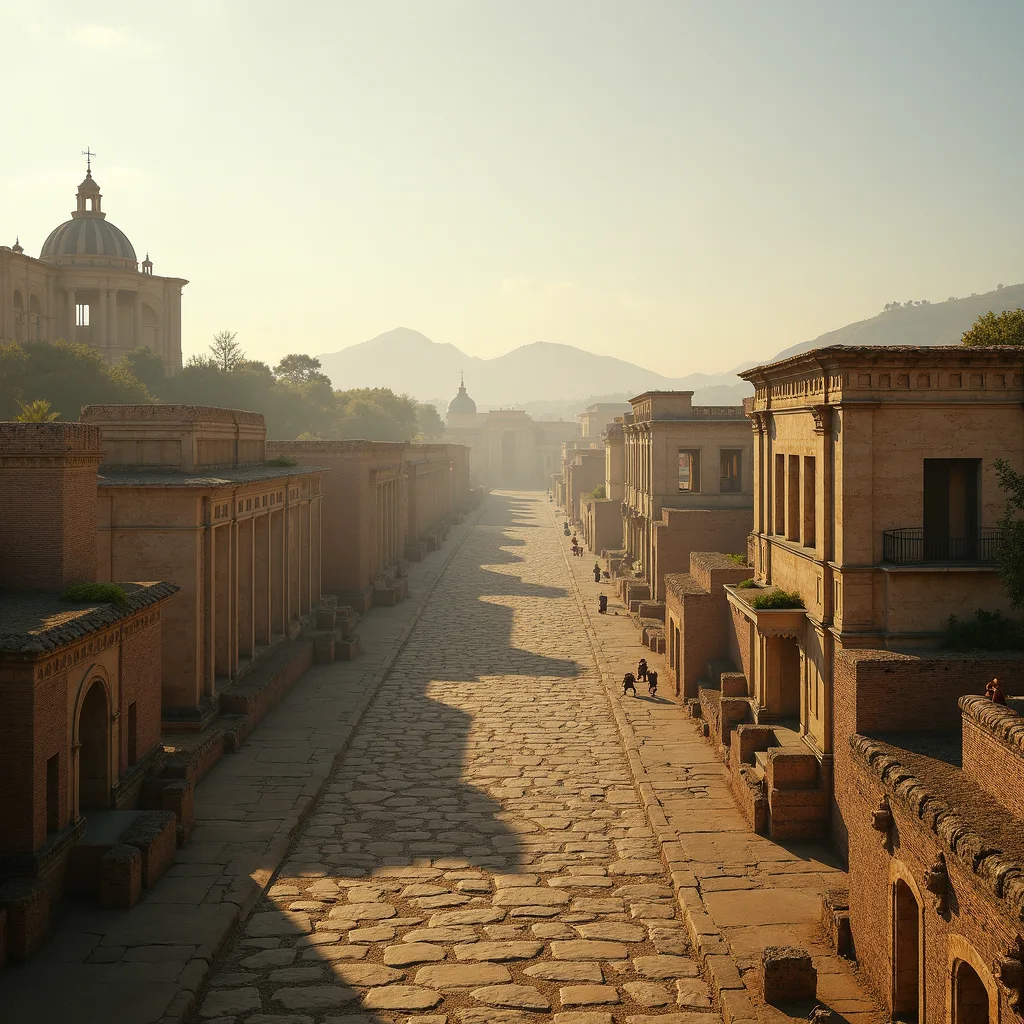
When you drive on a Roman road today—and yes, you can still do this in Europe—you're literally traveling on the same stone surface built 2,000 years ago. The Via Appia, constructed in 312 BCE, still carries traffic. Meanwhile, modern American highways typically need major resurfacing every 15-20 years.
The secret lies in the Roman engineering principle called the "stratified road." Roman engineers didn't just pave a surface; they built down. A typical Roman road had four distinct layers:
The bottom layer (statumen) was large stones, designed to distribute weight and allow drainage. Above that came the rudus—gravel and mortar mixed to create a stable base. Then came the nucleus, a layer of smaller stones and sand. Finally, the polygonal stones (agger) formed the top surface.
This wasn't arbitrary. Roman engineers understood load distribution. They knew water was the enemy of infrastructure. They sloped roads to shed water rather than trap it. The multi-layer system meant that even if the top surface cracked, the underlying structure remained intact.
Modern roads, by contrast, often use a two-layer system: asphalt on top, compacted base below. Asphalt is a petroleum product that expands and contracts with temperature. In cold winters, it cracks. In hot summers, it softens. Water seeps into these cracks, freezes underneath, and the road buckles. This cycle repeats every few years, requiring expensive repairs.
The irony? Roman roads weren't actually built for speed—they were built for permanence. Modern infrastructure is designed around a different calculation: build it cheap, replace it often.
What was Roman concrete and why couldn't we replicate it for 1,500 years?
Roman concrete, made with volcanic ash (pozzolana) that chemically reacted with lime and seawater, actually strengthened over time, while modern Portland cement weakens as it ages, and this formula was completely lost until the 20th century.
The Pantheon's concrete dome in Rome is still standing. It's been exposed to weather for nearly 2,000 years. Cracks? Barely any. Compare this to modern concrete structures—overpasses, parking garages, dams—that crack and crumble within 30-50 years.
The difference is pozzolana, a volcanic ash from the region near Naples. When mixed with lime, water, and aggregate, pozzolana undergoes a chemical reaction called pozzolanic reaction. This creates new crystalline compounds that literally bond the concrete together at a molecular level. But here's the incredible part: the reaction continues for centuries. Roman concrete doesn't just set and stop—it continues to harden and strengthen indefinitely.
We don't know exactly how Romans discovered this. Pliny the Elder documented it, but the precise ratios were lost after Rome fell. For 1,500 years, no one could replicate Roman concrete's strength. Medieval builders couldn't explain why Roman structures outlasted their own.
Modern Portland cement (invented in 1824) follows a different chemistry. It sets quickly, which is convenient for construction schedules. But it sets through hydration that eventually completes. After about 28 days, the chemical reactions slow dramatically. After 50 years, the concrete begins to deteriorate as external factors—water, carbon dioxide, freeze-thaw cycles—break down its molecular bonds.
Scientists finally reverse-engineered Roman concrete in the 1990s. Some modern construction projects now use it, but it's more expensive than Portland cement. The economic pressure to use cheaper materials remains overwhelming.
Why did Romans invest in maintenance when modern cities don't?
The Roman state employed dedicated road maintenance crews with fixed budgets and accountability, treating infrastructure as a permanent national asset, while modern cities treat it as an expense to minimize until crisis forces expensive emergency repairs.
Rome had something we lack: the cursus publicus, a government agency dedicated entirely to road maintenance. They had inspection protocols. They had budgets. They had personnel whose entire job was to walk sections of road, identify problems, and fix them before they became catastrophic.
This wasn't altruism. The Roman military depended on roads. The economy depended on roads. The empire's ability to project power depended on roads. Maintaining infrastructure was treated as a strategic investment, not a budget line to cut.
Modern cities face a different incentive structure. A mayor who invests in preventative maintenance won't see the political benefit because the benefits are invisible—roads that don't fail, bridges that remain safe. But a mayor who announces a new highway or rail line gets a ribbon-cutting ceremony. Maintenance is boring. It doesn't win elections.
Additionally, our infrastructure funding model is broken. In the U.S., the American Society of Civil Engineers estimates that we have a $2.6 trillion infrastructure maintenance backlog. Cities are chronically underfunded. They patch potholes reactively rather than maintaining proactively. A pothole costs $50-100 to fill temporarily. When repeated potholes undermine the entire road base, a full resurfacing costs millions.
Rome understood a basic economic principle: spend a little now on maintenance, or spend a fortune later on replacement. We've inverted that logic.
What does Roman infrastructure teach us about planning for the future?
Roman infrastructure succeeded because engineers built with redundancy, planned for centuries rather than election cycles, and accepted higher upfront costs for exponential long-term savings—a mindset almost entirely absent from modern governance.
Roman aqueducts are a perfect example. The Pont du Gard in France is a three-tiered structure built to carry water across a valley. Why three tiers? Redundancy. If one tier failed, water could still flow through another. Romans could have built a cheaper single-tier structure, but they didn't.
They also over-engineered capacity. Aqueducts were built to handle peak demand plus extra, accounting for future population growth, drought, and maintenance shutdowns. Modern infrastructure is typically built to minimum specifications—just enough for current demand. Then when populations grow or usage increases, we scramble to expand.
The Byzantine Empire didn't fall—it adapted for 1000 years partly because it inherited and maintained Roman infrastructure systems. Those roads, aqueducts, and fortifications continued functioning through centuries of change because they were built to last.
Modern planners have a shorter time horizon. A highway is designed for a 20-year lifespan. A rail line, maybe 30 years. This ensures that infrastructure will need replacement, creating ongoing construction and business opportunities. But it also means we never escape the cycle of building and rebuilding.
For context on how societies make long-term decisions, Guns, Germs, and Steel explores how geography and initial choices cascade through history—infrastructure choices work similarly, with early decisions limiting or enabling centuries of development.
Key Definitions
- Pozzolana
- A volcanic ash, primarily composed of silica and alumina, that chemically reacts with calcium hydroxide (lime) in water to create durable binding compounds. Named after Pozzuoli, a region near Naples where it was mined by Romans.
- Pozzolanic Reaction
- A chemical process occurring when volcanic ash mixes with lime and water, creating new crystalline compounds that strengthen over time, continuing for centuries rather than stopping after initial curing.
- Stratified Road System
- A multi-layered road construction method using statumen (foundation stones), rudus (gravel-mortar), nucleus (smaller stones), and agger (surface stones) to distribute weight, prevent water infiltration, and enable drainage.
- Portland Cement
- A manufactured cement developed in 1824 that hydrates quickly and sets within 28 days, widely used in modern concrete but does not continue strengthening over time like Roman pozzolanic concrete.
- Cursus Publicus
- The Roman government agency responsible for maintaining roads, with dedicated budgets, personnel, and inspection protocols to ensure infrastructure durability and functionality.
The Bottom Line
Roman infrastructure outlasted empires because Rome treated building as a permanent investment, not a temporary project. Engineers used superior materials (pozzolanic concrete), smarter design (multi-layered foundations, redundancy), and continuous maintenance (dedicated funding and personnel). Modern cities prioritize cost reduction and quick construction over durability, creating infrastructure that must be replaced every 20-40 years. The irony is stark: we have better technology but worse results because we've abandoned the principle that made Rome last—the willingness to invest more upfront to save immensely later.
Frequently Asked Questions
- Are there any Roman roads still in use today?
- Yes, many Roman roads remain functional after 2,000 years. The Via Appia (Appian Way) near Rome still carries traffic, though it's now preserved as a historical site. Many other Roman roads form the basis of modern European road networks, built over the original Roman foundations. In some cases, the actual Roman stone surface is still in use.
- Why can't we just build everything with Roman concrete now?
- Roman concrete is more expensive than modern Portland cement and requires specific volcanic ash (pozzolana) from limited geographic sources. Additionally, modern construction schedules demand fast-setting materials—Portland cement sets in 28 days, allowing rapid project completion. Some modern projects do use pozzolanic concrete (called "geopolymer concrete" or "eco-cement"), but cost and scheduling pressures favor cheaper alternatives.
- How much would it cost to maintain modern infrastructure like Rome maintained roads?
- The American Society of Civil Engineers estimates that preventing the $2.6 trillion infrastructure backlog from growing would require investing about $2.6 trillion over the next decade—roughly $260 billion annually. This sounds enormous, but preventative maintenance actually costs far less than emergency repairs and replacement. For comparison, the U.S. military budget exceeds $800 billion annually, suggesting it's a matter of political priority, not actual capacity.