Dialogue Without Quotation Marks
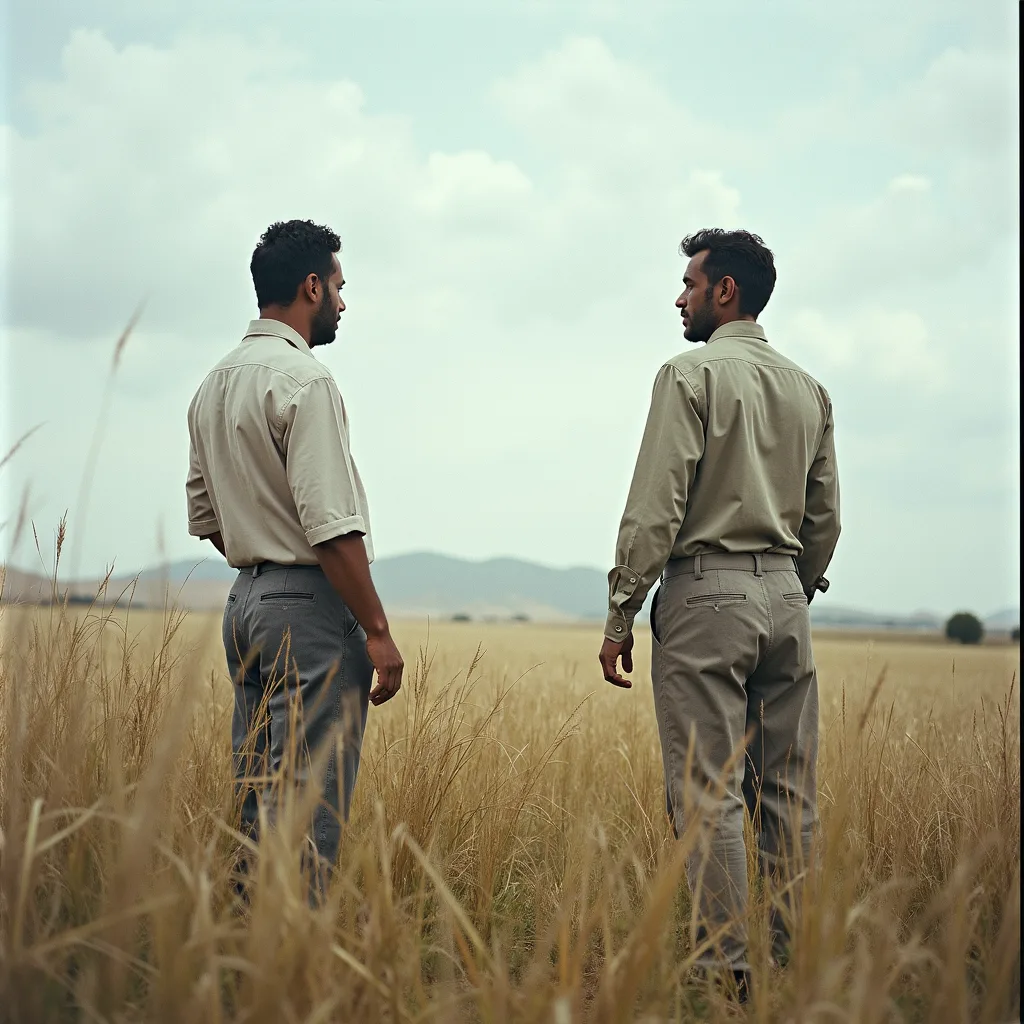
Open The Road by Cormac McCarthy. You'll notice something missing: quotation marks. Dialogue flows into narrative, blurring the line between what's spoken and what's thought. It's disorienting at first. Then it becomes hypnotic.
The Conventional Way
Most fiction follows a simple rule:
"Use quotation marks for speech," he said.
It's clear. It's functional. It works. Readers know exactly who's talking and when.
But some writers reject it.
Why Writers Ditch the Marks
Cormac McCarthy is the most famous example. His novels—Blood Meridian, The Road, No Country for Old Men—feature dialogue without quotation marks, minimal punctuation, and a prose style that feels biblical and stark.
Why?
Because quotation marks interrupt. They create visual noise. They separate speech from the rest of the narrative, when sometimes the goal is to make speech feel like part of the landscape.
In The Road, a father and son wander through a post-apocalyptic wasteland. The dialogue between them is sparse, fragmented, desperate. Removing quotation marks makes their words feel like echoes—half-formed thoughts spoken into the void.
It's not just stylistic. It's thematic.
When It Works
Stream of consciousness: James Joyce's Ulysses blends thought and speech so seamlessly that quotation marks would feel like barriers. The reader is inside the character's mind, where spoken words and internal monologue aren't distinct.
Poetic prose: If your style is lyrical, minimal, or experimental, quotation marks can feel clunky. Writers like Marilynne Robinson or Jenny Erpenbeck use understated punctuation to create a meditative, flowing rhythm.
Close third-person: When you're deep in a character's perspective, their observations and their speech can blur. Removing quotation marks reinforces that intimacy.
When It Doesn't
If your story has:
- Multiple characters in a scene — Without quotation marks, readers can lose track of who's speaking.
- Complex dialogue — If your characters argue, interrupt, or talk over each other, clarity matters.
- Genre expectations — Readers of thrillers, romance, or fantasy expect conventional formatting. Breaking that can feel pretentious.
The rule: If your reader gets confused, the experiment failed.
The Middle Ground
You don't have to go full McCarthy. There are subtler ways to play with dialogue formatting:
1. Em dashes instead of quotation marks
—I don't know, he said.
—You never do.
This is common in European literature (Saramago, Ferrante). It's cleaner than quotation marks but still signals speech.
2. Mixing styles for different POVs
If you're writing multiple perspectives, you could use quotation marks for one character and none for another—signaling their different relationships to language and communication.
3. Minimal punctuation overall
McCarthy doesn't just drop quotation marks—he also avoids commas, apostrophes, and semicolons where possible. The minimalism is consistent across the entire text, which makes it feel intentional, not lazy.
What McCarthy Says About It
In a rare interview, McCarthy explained his approach:
"There's no reason to blot the page with weird little marks. If you write properly, you shouldn't have to punctuate."
He's not anti-punctuation. He's pro-clarity. His argument: if the sentence structure is strong, you don't need extra signals.
Which is true—if you're Cormac McCarthy.
For the rest of us, quotation marks are helpful.
The Risk: Readers Will Hate It
Not everyone loves unconventional formatting. Some readers find it elitist, confusing, or unnecessarily difficult.
And they're not wrong.
When you break convention, you're asking readers to work harder. That's fine—if the payoff is worth it. If the style serves the story. If it creates an effect you couldn't achieve any other way.
But if you're doing it just to seem literary? Readers will notice. And they won't be impressed.
Test It
Before committing to no quotation marks for an entire novel, try it in a short story or chapter. Then ask:
- Is it still clear who's speaking?
- Does the style enhance the mood, or distract from it?
- Would beta readers notice if you switched back to quotation marks?
If the answer to the last question is "no," then the unconventional formatting isn't doing its job.
Genre Matters
Literary fiction gives you more leeway. Readers expect experimentation.
But if you're writing:
- Thriller — Readers want pace and clarity.
- Romance — Emotional beats need to land cleanly.
- Sci-fi/Fantasy — Worldbuilding is already complex; don't add another layer of cognitive load.
Breaking conventions in genre fiction is possible (look at N.K. Jemisin's Broken Earth trilogy, which uses second-person POV). But you need to be really good to pull it off.
The Real Question
It's not "Should I use quotation marks?"
It's "What am I trying to make the reader feel?"
If you want intimacy, stream-of-consciousness, a blurred line between thought and speech—then dropping quotation marks might work.
If you want clarity, pace, and accessibility—use them.
Examples from Published Work
No Quotation Marks: The Road by Cormac McCarthy
He looked at the boy. You wanted to know what the bad guys looked like. Now you know. It may happen again. My job is to take care of you. I was appointed to do that by God. I will kill anyone who touches you. Do you understand?
No quotation marks. No attribution. Just raw dialogue that feels like a whisper in the dark.
Em Dashes: Blindness by José Saramago
—How did you go blind, When, It happened yesterday, I was in my car stopped at the traffic lights.
The em dash signals speech while keeping the prose fluid.
Conventional: The Great Gatsby by F. Scott Fitzgerald
"I hope she'll be a fool—that's the best thing a girl can be in this world, a beautiful little fool."
Classic quotation marks. Clear, elegant, timeless.
If You Do It, Commit
The worst thing you can do is be inconsistent.
If you drop quotation marks in Chapter 1, you can't bring them back in Chapter 5 because a scene got confusing. The reader will assume it's a mistake.
Pick a style. Stick with it. Make it feel intentional.
Final Thought
Quotation marks aren't the enemy. They're a tool. Most of the time, they work.
But if your story demands something different—if the conventional approach feels wrong—then experiment.
Just know that breaking the rules means readers will judge you more harshly if the prose doesn't deliver.
Quotation marks are like training wheels. Most writers need them. But if you're skilled enough—and your story calls for it—you can ride without them.